Pre-filters and carbon
Pre-filters and carbon are the first treatment stages ahead of the reverse-osmosis plant. We supply, fit and service these items for dialysis water systems in Pinetown, Durban and across KwaZulu-Natal.
What pre-filters and carbon do
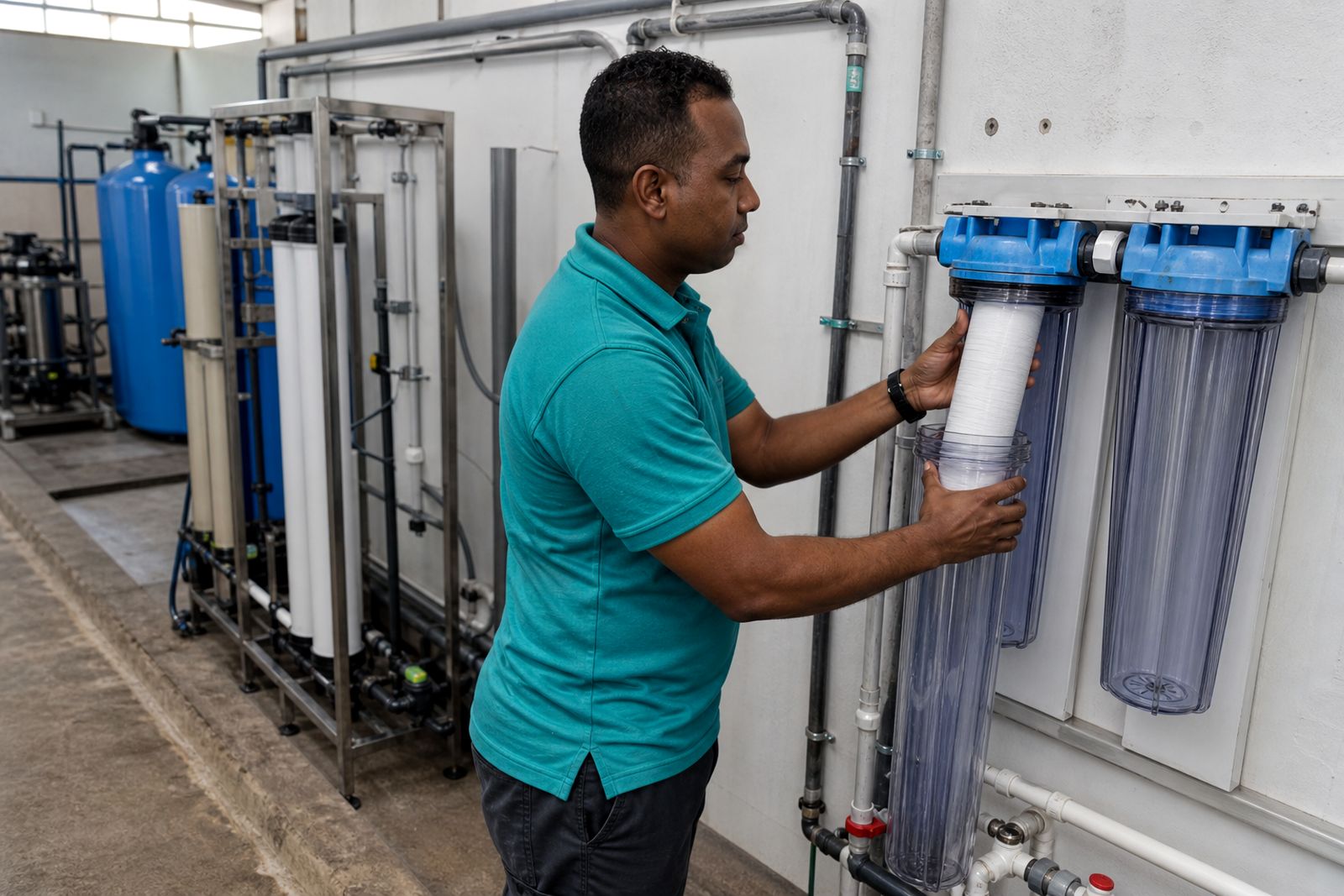
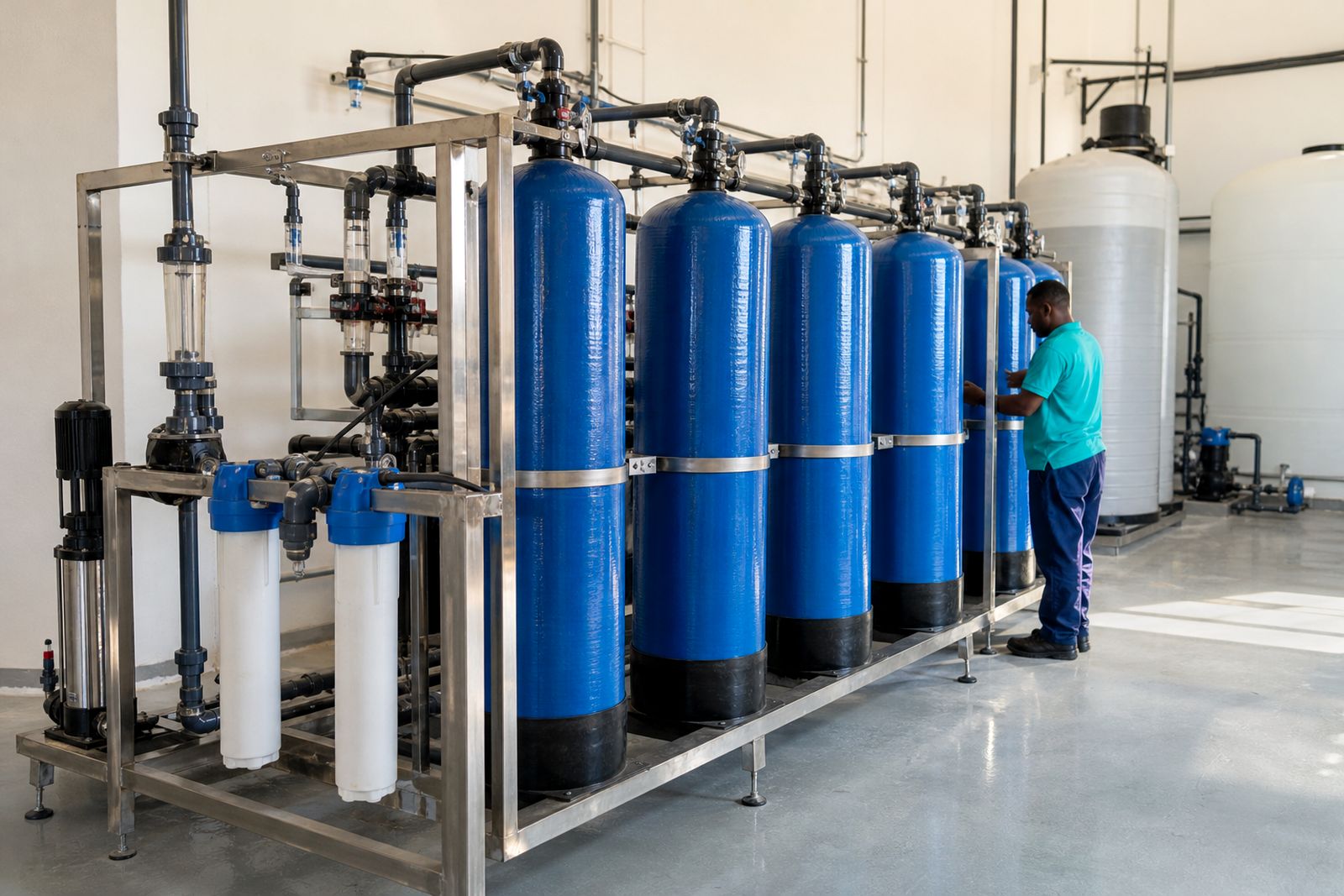
These components sit at the front of the water plant and handle the first cleaning steps before water reaches the reverse-osmosis section. Pre-filters remove suspended solids such as sand, rust and pipe scale. Carbon vessels reduce chlorine and chloramine carry-over where the incoming supply requires it, helping protect downstream membranes, valves and loop components.
Because municipal water quality can shift after pipe work, reservoir changes or heavy rain, the first stages need to be chosen for the actual site and then watched properly in service. In coastal parts of KwaZulu-Natal, incoming water can also change after storms and maintenance on the local network, so the front end of the plant often takes the strain first.
- Sediment cartridge stages for visible and fine particulate matter
- Carbon stages for oxidant reduction ahead of RO membranes
- Single and multi-stage arrangements depending on the plant layout
- Change-out support, sanitising and record keeping as part of service visits
Sizes, options and working limits
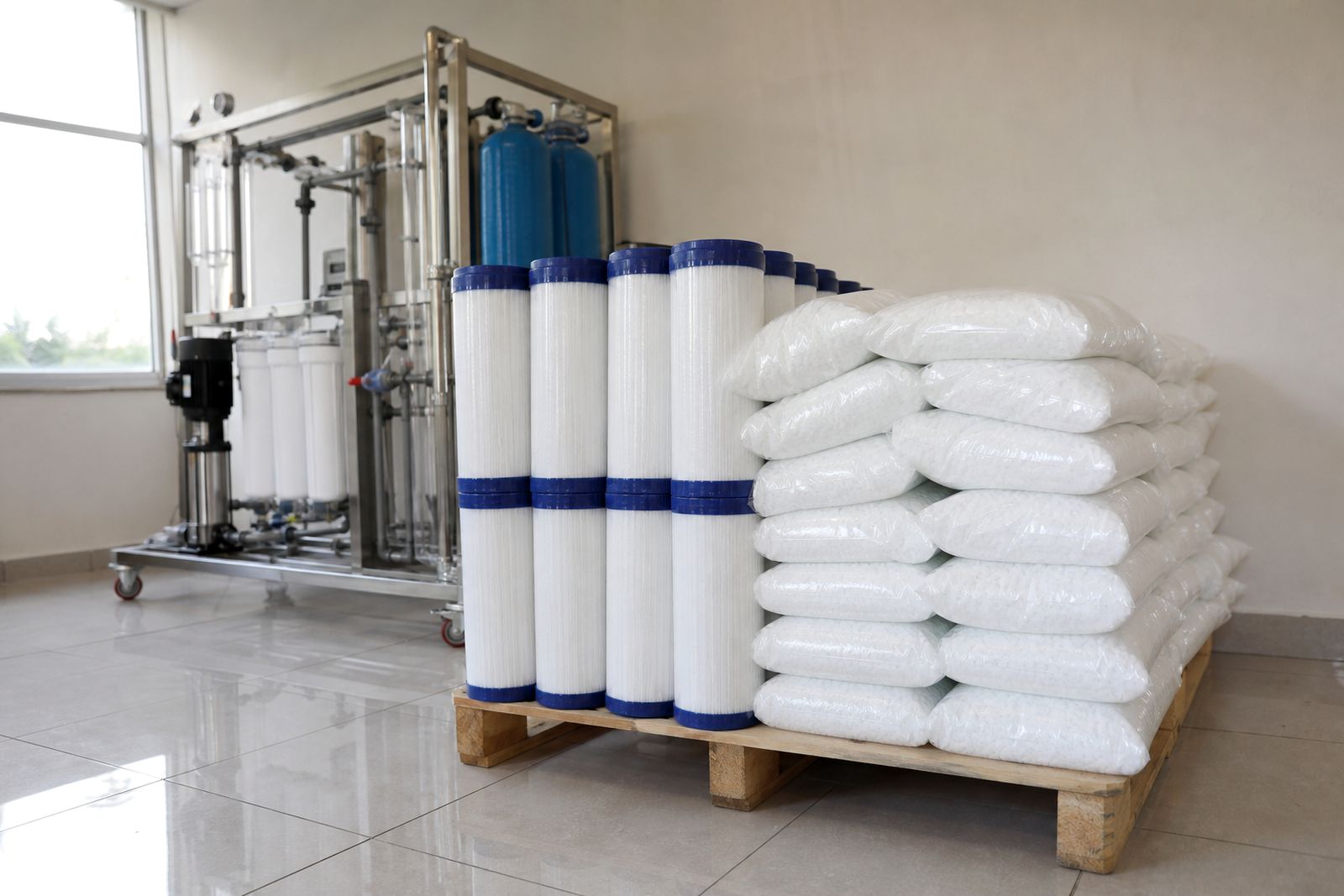
We match the filter housings, cartridges and carbon vessels to the layout of the dialysis water plant and the available pipework in the plant room. Common cartridge housing formats include 10 inch, 20 inch and large diameter versions for sites that need longer service intervals between cartridge changes. Carbon can be supplied in one or more vessels depending on the treatment train and the duty expected at the site.
Working limits matter. Cartridge housings and vessels must suit the incoming pressure range, the service temperature of the water line and the space available for safe removal and refill work. We also check that isolating valves, drains and sample points are in the right place, because a filter that cannot be serviced properly becomes a problem very quickly.
- Cartridge options from coarse sediment through to finer polishing stages
- Carbon vessel options arranged to suit the plant sequence and maintenance access
- Connection sizes selected to match existing plant pipework
- Working pressure and temperature selected to suit the site equipment schedule
We do not set clinical limits or testing schedules. The unit and its responsible staff decide the testing schedule and limits, and we keep the records required for the water plant service file.
Where these stages suit, and where they do not
Pre-filters and carbon suit dialysis water plants that take water from a municipal supply or another incoming source that has already been approved by the unit for use with its treatment train. They are essential where pipe sediment, municipal disinfectants or intermittent water quality changes can affect the RO section. They also suit sites planning a new plant room where access for routine servicing can be built in from the start.
These stages are not a stand-alone answer for dialysis water quality. A sediment cartridge cannot correct dissolved salts, and carbon alone does not replace reverse osmosis, loop disinfection or proper testing records. If the incoming supply is unstable, dirty after nearby road works, or affected by frequent pressure swings, the whole front end must be assessed rather than just swapping one filter for another. We've seen small access issues turn a simple change into a long shutdown.
Installation needs in the plant room
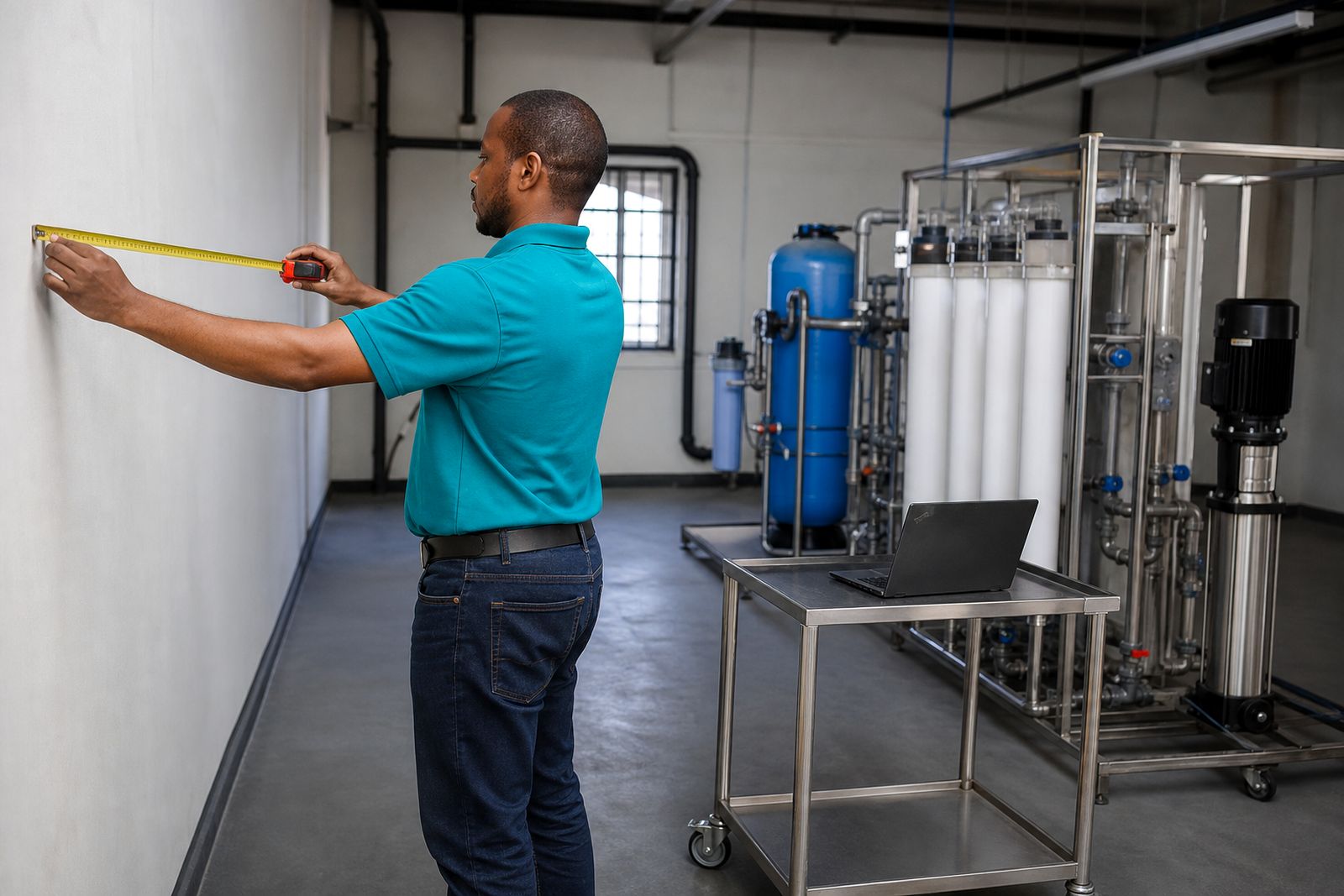
For reliable servicing, the first stages need enough clear space above and around each housing or vessel. We look at wall position, floor drains, bypass lines, isolation valves and whether there is a practical route to remove cartridges or refill media without contaminating the area. In older plant rooms around Durban and inland KZN, cramped corners and low pipe runs are common, so site survey work is important before any parts are ordered.
- Solid mounting or vessel support suited to the weight when full of water
- Clear access for cartridge removal and vessel service work
- Drain point nearby for depressurising, flushing and controlled discharge
- Isolation valves before and after each stage
- Good lighting and cleanable surfaces in the work area
- Protection from direct sun, weather and unnecessary heat
If power cuts are common at the site we also check restart steps and whether any monitoring or alarms need manual confirmation after the system comes back on.
Routine care and replacement
These are service items and they need regular attention. Cartridges are replaced when pressure drop, fouling or the service plan indicates change-out. Carbon media is checked as part of the plant service routine and replaced on the schedule agreed with the unit and its responsible staff. Housings, seals and vessel heads are inspected for wear, leaks and proper closing torque at each visit.
Good records matter just as much as the parts themselves. We log service activity, change-outs and related water-quality records as part of the plant file, but the unit and its responsible staff set the testing schedule and limits. We do not give clinical advice, and any action linked to patient treatment remains with the clinical team and facility management.
What to tell us when you enquire
Use the enquiry form on our contact page and give us the practical details that help us match the correct first-stage treatment to your plant. If your site is in Pinetown, Durban, Pietermaritzburg, Richards Bay, Newcastle or elsewhere in KwaZulu-Natal, let us know whether this is for a new installation, a replacement on an existing plant, or a service issue that needs attention soon.
- Town and facility type
- Whether the system is existing or planned
- Current filter and carbon arrangement if known
- Housing sizes, connection sizes and pipe material if known
- Photos of the plant room and front-end pipework
- Any leak, pressure drop, taste or odour concern noted by the unit staff
- How often cartridges or carbon have been changed recently if records are available
If you are unsure about the details, send clear photos and a short note on the issue. Our team can review the layout and advise on the next step from tap to drain.
What our Water Treatment customers say
Verified Google reviews
Questions we get asked
Can you replace only the cartridges or carbon on an existing plant?
Yes, if the existing housings and vessels are suitable and in serviceable condition. We inspect the front end first and then recommend replacement parts, vessel work or a broader service if needed.
Do you do the testing for the dialysis unit?
We support water-quality testing logs and keep the records linked to the plant service file. The unit and its responsible staff set the testing schedule and limits.
Do pre-filters and carbon solve all water quality problems?
No. They are the first treatment stages only and must work as part of the full dialysis water plant, including reverse osmosis, distribution and disinfection where required.
Also worth a look
Ask about a water plant
Send a note through our contact form with your unit, the number of treatment stations and whether you need a new plant, a service or testing, and an engineer will contact you.
Open the contact form