Water plants
We design, install and service reverse-osmosis water treatment plants for dialysis units, from incoming water to final drain connections. This page explains the main plant elements, how the options fit together, and what to consider before choosing a layout.
What this section covers
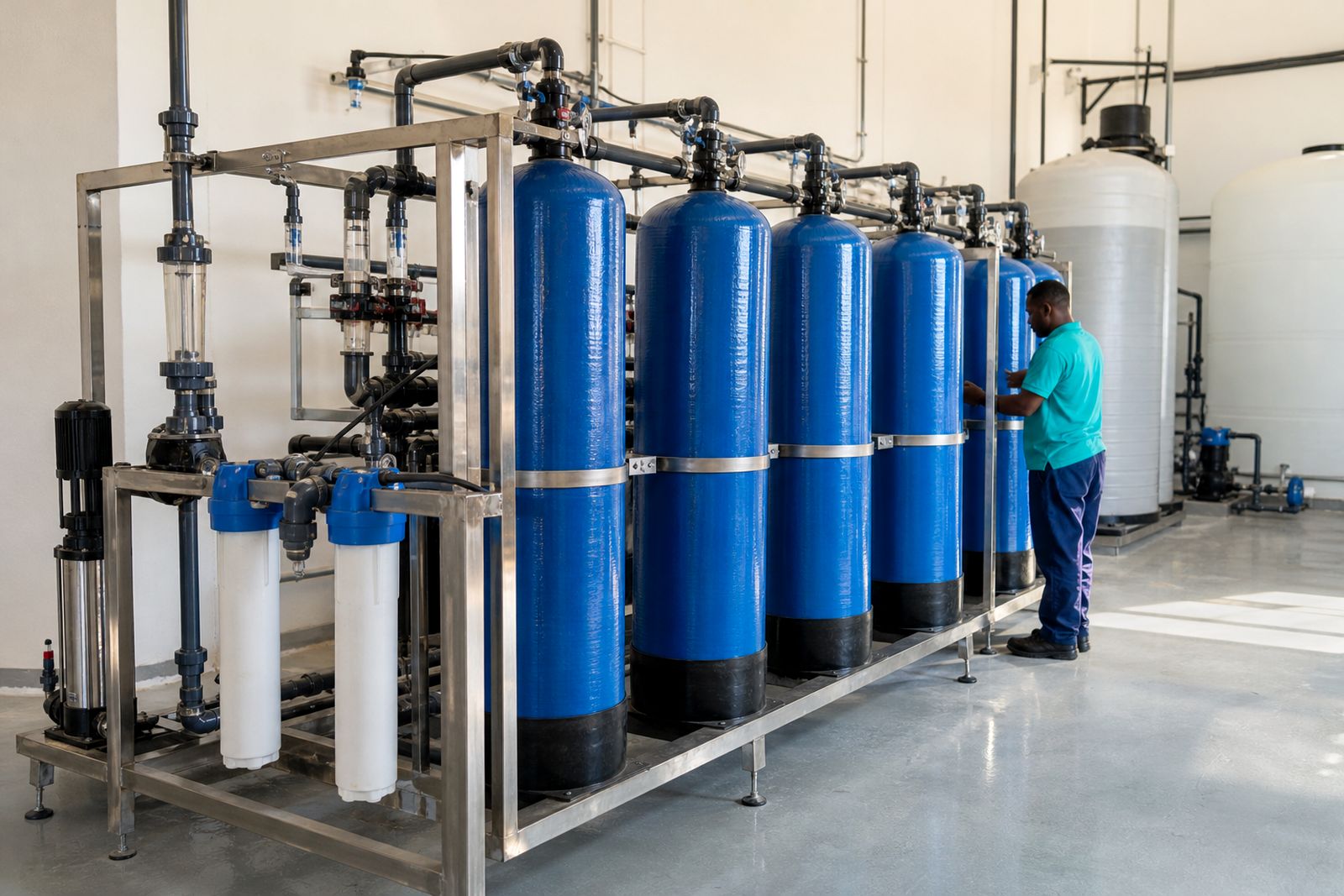
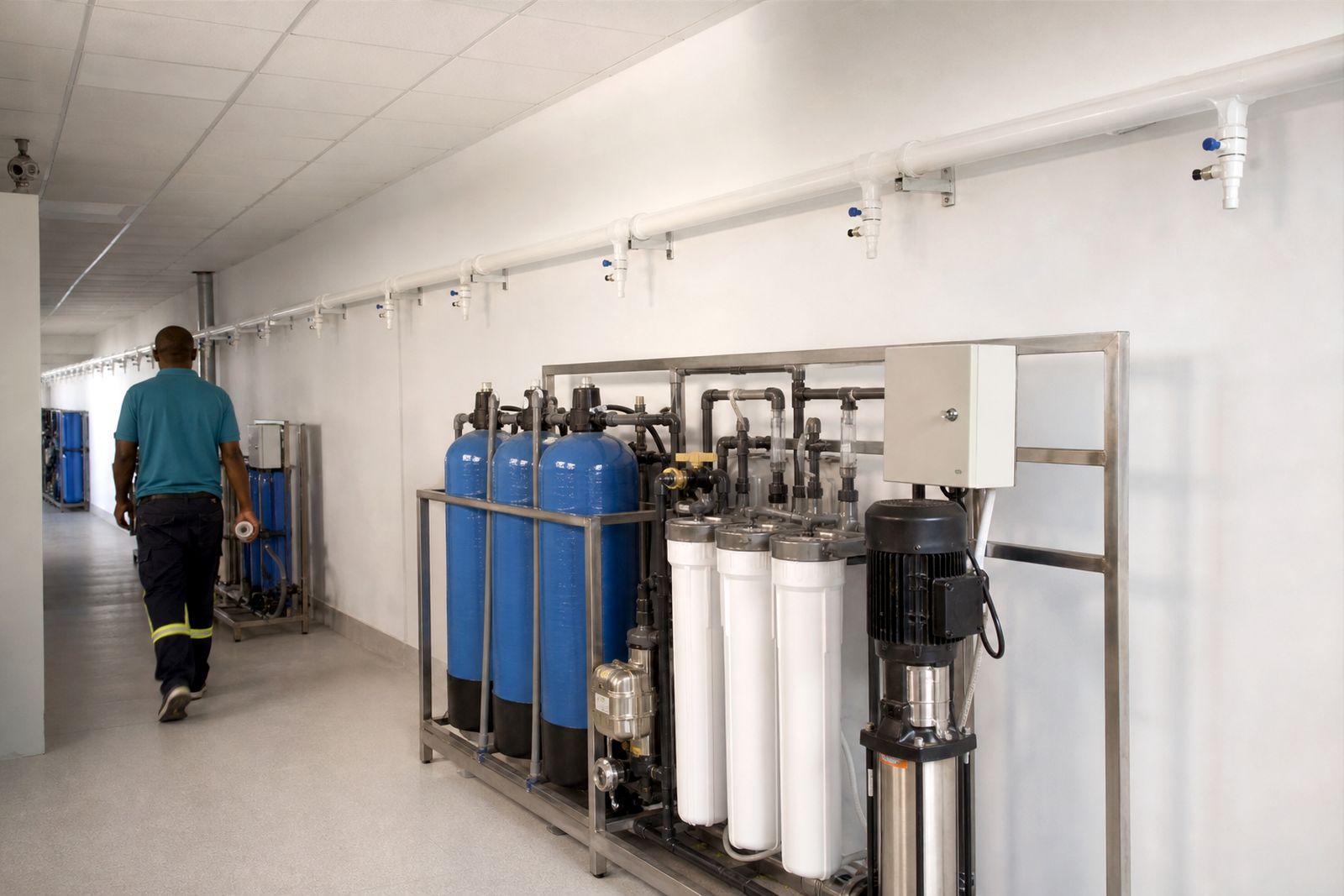
Our water plants section focuses on complete reverse-osmosis treatment systems for dialysis units. That includes pre-treatment, carbon and sediment stages, softening where required, RO membranes, storage and distribution arrangements, drain routing, disinfection points and the day-to-day service items that keep the plant running properly.
For units in Pinetown, Durban and wider KwaZulu-Natal, the right plant is not chosen from a catalogue alone. Municipal supply can vary from area to area, room space is often tight, and coastal humidity can affect how a plant room needs to be laid out and ventilated. We look at the site, the incoming water, the working routine and the service access before recommending a setup.
How to choose the right plant layout
The best starting point is to decide how your unit will be operated and maintained. A plant for a small unit with one treatment area and short pipe runs is different from a plant serving multiple positions through a longer loop. Drain points, floor falls, water storage, power backup planning during power cuts and access for filter changes all matter.
- Incoming water quality: This affects the pre-treatment stages and how often service items may need replacement.
- Available floor space: Narrow rooms may need a different equipment arrangement to keep service access open.
- Distribution route: Short direct runs suit some rooms, while others need a full loop to maintain circulation.
- Service routine: If staff need clear daily check points, the plant should be arranged so gauges, sampling points and drains are easy to reach.
- Drain and washdown provision: Plant rooms need sensible drainage for maintenance and disinfection work.
If you are still planning a new room, it helps to settle the water route early. Moving a drain line or adding a wash basin later can become a much bigger job than expected.
Reverse-osmosis plant compared with only basic treatment
Dialysis units need a dedicated water treatment process rather than only general-purpose filtration. A full reverse-osmosis plant is built around repeatable treatment, controlled flow paths and clear service points, not just a few loose filter housings on a wall.
- Basic treatment only: May include sediment or carbon stages, but does not replace a complete dialysis water plant.
- RO plant: Adds the membrane stage, planned pre-treatment, proper sampling points, managed drain connections and a clear maintenance sequence.
- Basic treatment only: Often leaves record keeping to ad hoc notes.
- RO plant: Supports formal water-quality testing logs set by the unit and its responsible staff, with records kept in order.
- Basic treatment only: Can be harder to disinfect properly.
- RO plant: Is arranged so disinfection can be carried out in a controlled way across the relevant plant sections and loop.
We do not give clinical advice, and the testing schedule and limits remain the responsibility of the unit and its responsible staff. Our role is to supply, maintain, disinfect and keep the records you ask us to maintain.
Main parts of a complete water plant
A dialysis water plant is made up of connected stages, each with a practical job to do. When one part is overlooked, it usually creates trouble somewhere else, whether that is poor flow, difficult servicing or awkward shutdowns during routine work.
- Pre-treatment: Protects the downstream equipment and helps stabilise plant operation.
- Pre-filters and carbon: Installed to suit the water source and service routine.
- Softening stage: Where required, with regular salt top-ups and checks.
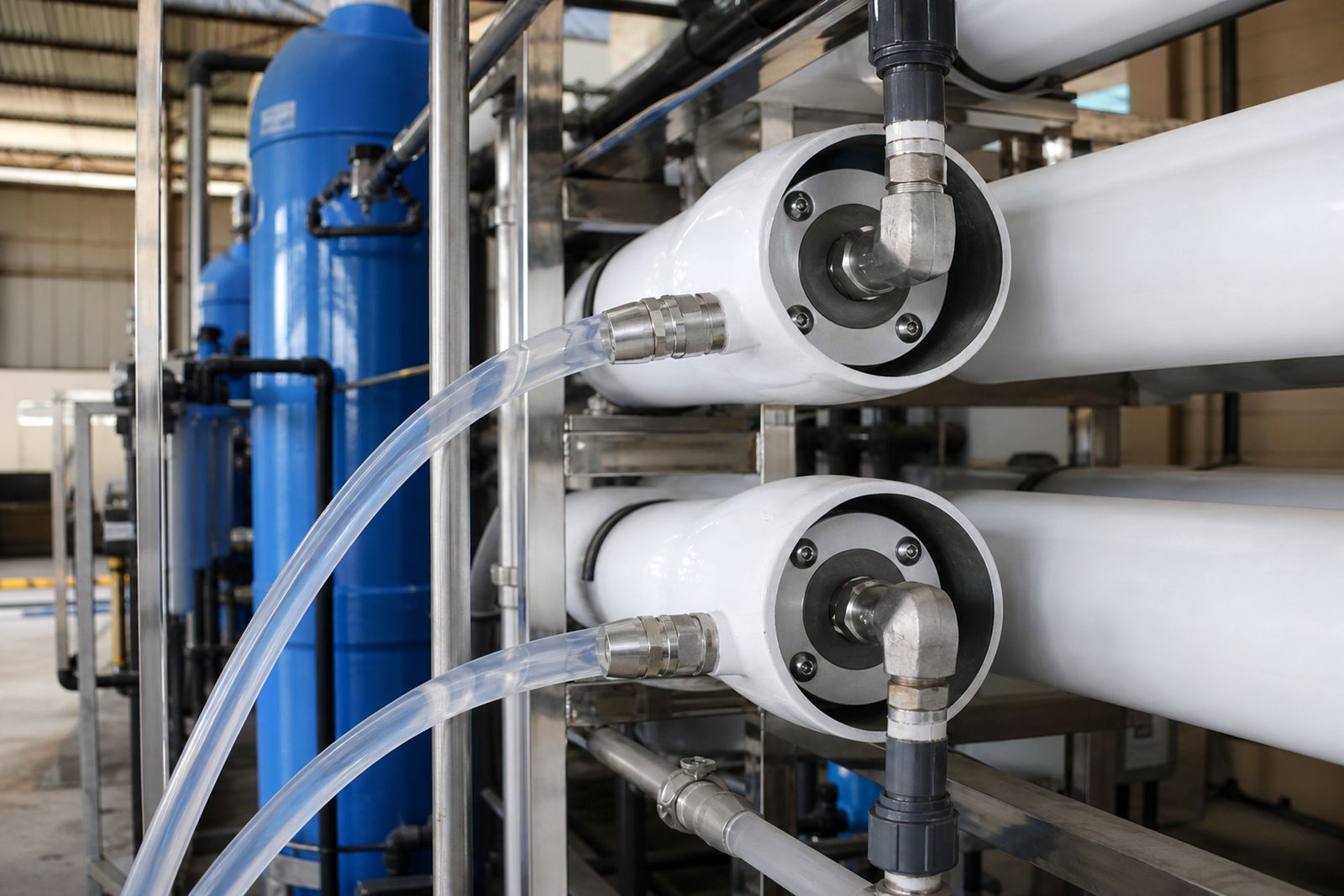
- RO section: The core treatment stage, planned with proper feed, reject and drain routing.
- Distribution arrangement: Direct supply or looped reticulation depending on the unit layout.
- Disinfection points: Included so cleaning can be carried out without guesswork.
- Testing and logs: Sampling points and records for the schedule set by the unit.
From tap to drain means exactly that. We look at the full route, not only the machine in the middle of the room.
Choosing between a simpler room and a more complex one
Some units have a straightforward plant room with a nearby feed line, a clear wall for mounting equipment and a direct drain. Others need extra planning because the plant room is shared, the route to treatment positions is longer, or there is limited working clearance around the equipment.
As a practical guide, a simpler room usually suits a neater installation with easier daily checks and faster service visits. A more complex room may need extra valves, more careful pipe routing, better labelling and a staged commissioning plan so each section can be checked properly. That extra planning saves time later, especailly when filters, salts and disinfection need to happen without disrupting the unit more than necessary.
We also consider humidity, corrosion risk near the coast and whether the room can be kept clean and dry after washdown. Those details make a real difference to plant life and day-to-day use.
Installation, records and ongoing support
Our work does not stop once the plant is installed. We handle installation, commissioning support, routine service work, filter and salt supply, disinfection and water-quality testing logs. The unit and its responsible staff decide the testing schedule and limits, and we keep the records as part of the agreed service arrangement.
If you are comparing options in this section, start with the reverse-osmosis plant page and the distribution loops page, then look at installation and testing topics to understand the full picture. For a new project or an existing unit that needs changes, send us an enquiry through the contact page and we will arrange the next step.
What our Water Treatment customers say
Verified Google reviews
Questions we get asked
Do you only supply complete new water plants?
No. We assist with complete plant projects as well as changes to existing dialysis water systems, including pre-treatment, loop work, disinfection, filters, salts and service support.
Can you help our unit decide testing limits?
We do not set clinical requirements or give clinical advice. The unit and its responsible staff set the testing schedule and limits, and we keep the records requested for the plant.
Do you work outside Pinetown and Durban?
Yes. We are based in Pinetown and install and service dialysis water plants across KwaZulu-Natal, with work in other provinces on request.
Ask about a water plant
Send a note through our contact form with your unit, the number of treatment stations and whether you need a new plant, a service or testing, and an engineer will contact you.
Open the contact form