Testing and service
Testing and service keeps a dialysis water plant predictable between major repairs and urgent call-outs. We support units from Pinetown near Durban across KwaZulu-Natal with planned maintenance, disinfection support and clear water-quality records.
What this section covers
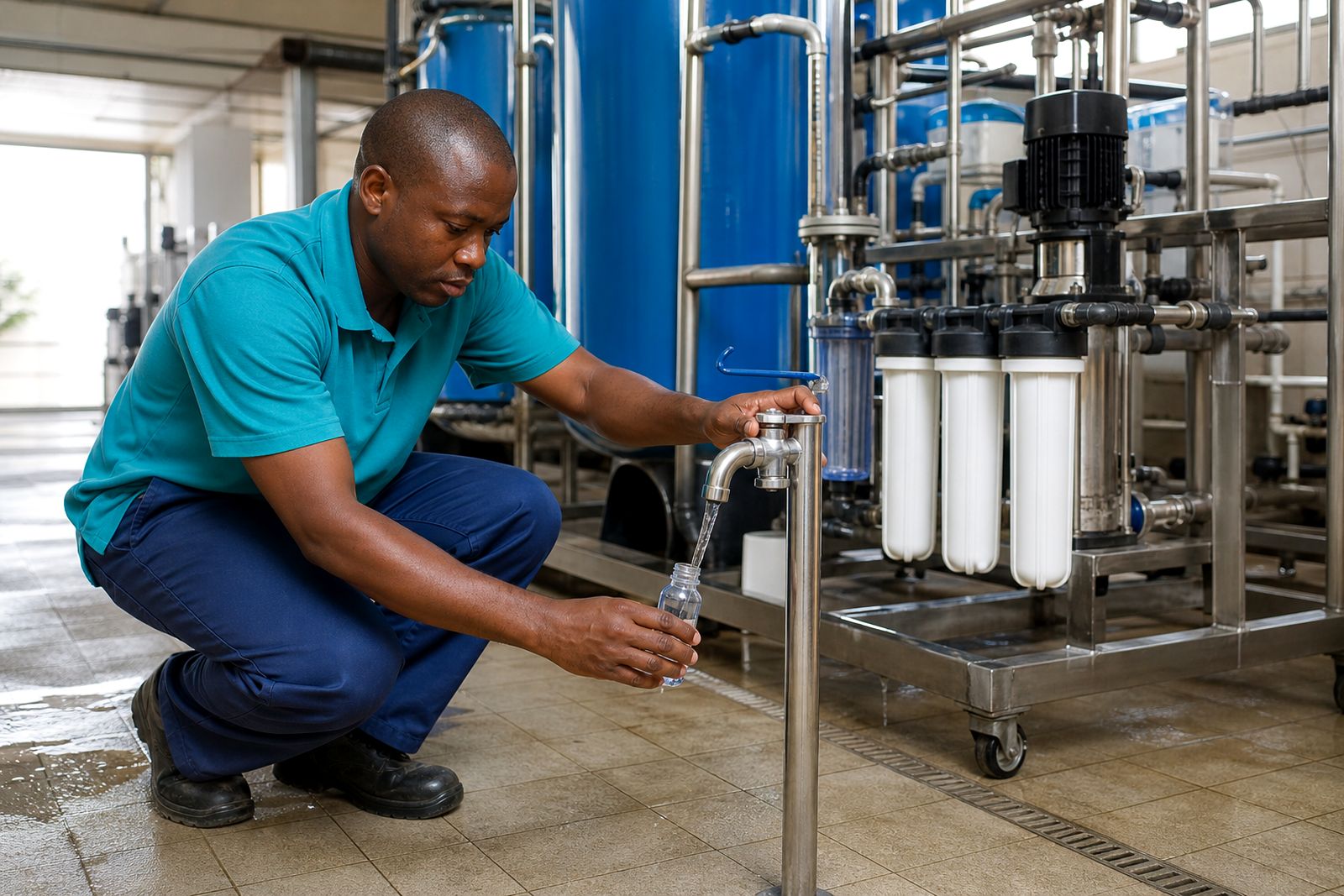
This section brings together the day-to-day support work around a dialysis water treatment plant after installation. That includes scheduled service visits, replacement of routine consumables, disinfection planning, checks on the reverse-osmosis plant and distribution loop, and keeping water-quality logs in order. Our work covers the plant from incoming municipal feed water through pre-treatment, membranes, storage where fitted, loop circulation and the drain connections linked to service tasks.
Some units need regular support on a standing plan, while others call us in for specific items such as disinfection or help with records. In both cases, the aim is the same: keep the plant clean, stable and properly documented so the responsible staff can review what has been done and when. We do not set clinical rules or advise on treatment decisions. The unit and its responsible staff set the testing schedule and limits, and we keep the records tied to the plant service work.
Water-quality logs and record keeping
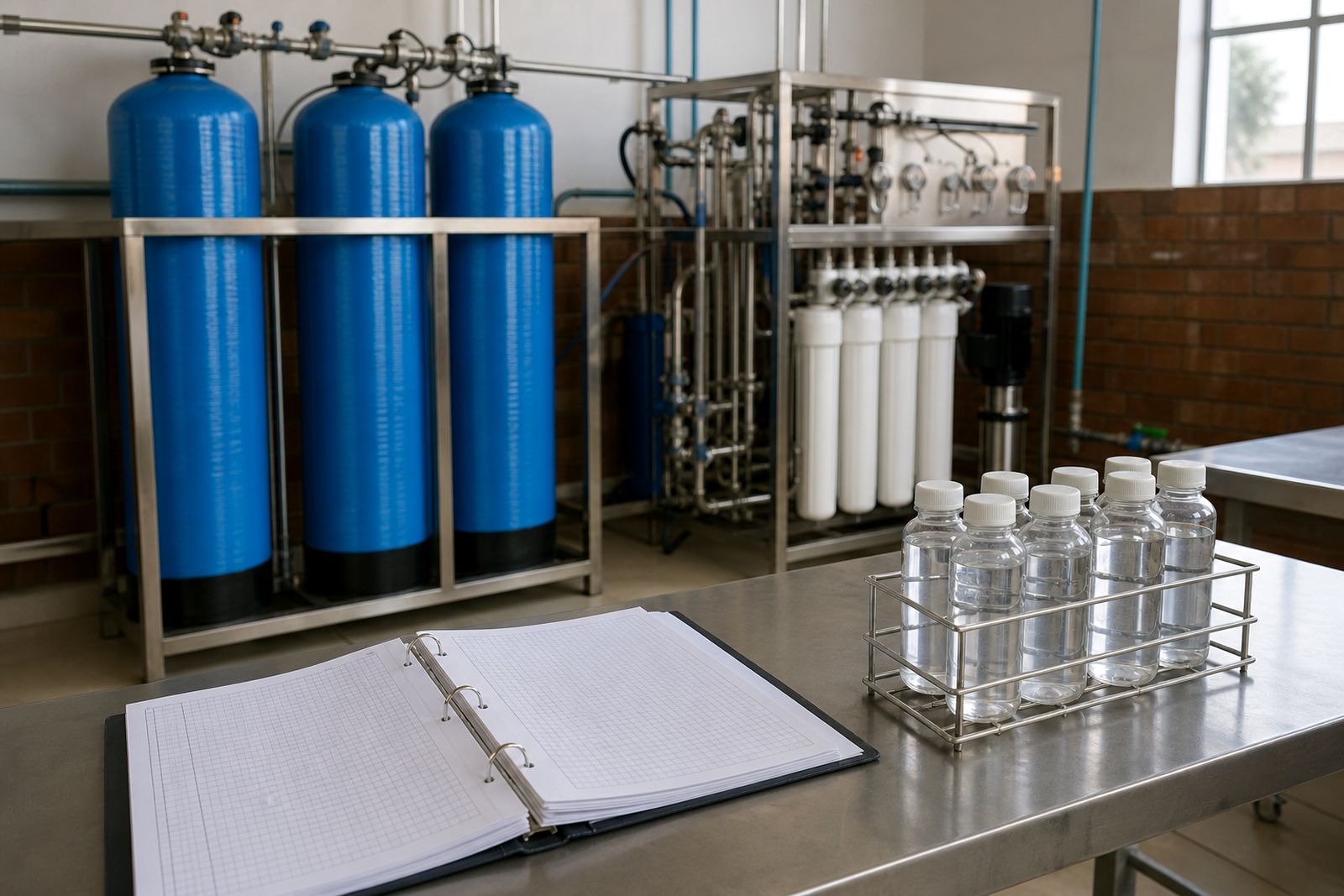
Good records matter when shifts change, when municipal water quality varies after line work, and when a unit needs to trace what happened before and after a service visit. We keep water-quality testing logs as part of the plant support process, using the schedule and acceptance limits set by the unit and its responsible staff. That way the paperwork stays aligned with the unit's own procedures.
Logs are useful for spotting patterns that are easy to miss on a busy day, especially after power cuts, planned water shutdowns or heavy rain in coastal areas. A clear record also helps when consumables were changed on one visit and disinfection was completed on another, which can happen in practice.
- Dates of service visits and routine maintenance tasks
- Filter and softener salt checks or replacements where applicable
- Disinfection dates and plant sections attended to
- Operator observations noted during handover
- Water-quality entries supplied under the unit's testing schedule
Planned maintenance compared with call-out service
Most units choose between a planned service arrangement and ad hoc call-outs, or they use a mix of both. Planned maintenance is usually the better fit where the plant runs daily and the unit wants routine checks done before small issues turn into downtime. Call-outs can still be needed after unexpected feed-water changes, pump faults or a problem noticed during daily checks.
- Planned maintenance: best for routine filter changes, softener checks, general inspection, service history and scheduled disinfection support.
- Call-out service: best for an urgent fault, abnormal plant behaviour, leaks, alarm conditions or follow-up after a municipal interruption.
- Planned maintenance: gives a steadier paper trail and fewer missed routine tasks.
- Call-out service: useful when the unit already manages most routine work in-house and only needs outside support at certain points.
If you are not sure which route suits your site, start by looking at how often the plant runs, how many staff are available for daily checks, and how difficult it is to source consumables at short notice in your area.
Disinfection and routine plant care
Disinfection should never be treated as a once-off item that sits outside the rest of the service plan. It works best when tied to routine inspections, consumable changes and the condition of the loop and plant room. We assist with disinfection work on dialysis water plants and distribution systems as part of broader maintenance support, from tap to drain.
In KwaZulu-Natal, warm coastal conditions can speed up fouling and make housekeeping more important than many sites expect. Plant rooms in Pinetown, Durban and nearby areas also deal with humidity, which affects how quickly minor leaks, damp insulation or corrosion signs are noticed. A proper visit looks at these practical issues, not only the main treatment components.
- Check pre-treatment condition before and after service work
- Inspect housings, pipe joints and valves for leaks or staining
- Review loop condition and general cleanliness of the plant room
- Confirm service notes and log updates before handover
How to choose the right support option
If your unit needs help mainly with records and traceability, start with the water-quality log side of this section. If the bigger concern is routine upkeep, filter condition, disinfection timing or recurring faults, planned service is usually the better starting point. Many sites need both, because records without maintenance leave gaps and maintenance without records makes follow-up harder.
A few practical questions can narrow it down quite quickly:
- Does the unit already have a testing schedule and acceptance limits set by responsible staff?
- Are daily checks being done consistently on each shift?
- Do routine consumables get changed on time, or only when a problem shows up?
- Has the site had recent municipal interruptions, pressure swings or water discolouration?
- Is the plant room easy to access for regular service and safe drain-down work?
Where a site is outside the main Durban and Pinetown area, planning matters even more. It helps to group routine work sensibly so the plant is not left waiting for a simple follow-up.
Service area and booking an enquiry
We are based in Pinetown and install and service dialysis water plants across KwaZulu-Natal, with work in other provinces on request. That includes support for units in and around Durban, the Highway area, the North Coast, the South Coast, Pietermaritzburg and inland towns where travel and site access need to be planned properly.
When you contact us, tell us whether you need help with water-quality logs, planned maintenance, disinfection, or a plant issue that needs inspection. If there is an existing service history on site, mention that too as it saves time. Clients reach us through the enquiry form on our contact page, and we will respond on the basis of the unit's service need and location.
What our Water Treatment customers say
Verified Google reviews
Questions we get asked
Do you decide how often our unit must test the water?
No. The unit and its responsible staff set the testing schedule and limits. We keep the records and align our service documentation with the unit's requirements.
Can you help with both planned maintenance and urgent faults?
Yes. We support routine planned maintenance as well as call-outs where a dialysis water plant needs inspection, follow-up service or disinfection support.
Do you only work in Durban and Pinetown?
No. We are based in Pinetown near Durban and service dialysis water plants across KwaZulu-Natal, with work in other provinces on request.
Ask about a water plant
Send a note through our contact form with your unit, the number of treatment stations and whether you need a new plant, a service or testing, and an engineer will contact you.
Open the contact form