Reverse-osmosis plants
A dialysis reverse-osmosis plant treats incoming water so the unit has a controlled supply for its process equipment and distribution loop. We design, install and service complete plants in Pinetown, near Durban, across KwaZulu-Natal and on request in other provinces.
What a reverse-osmosis plant does
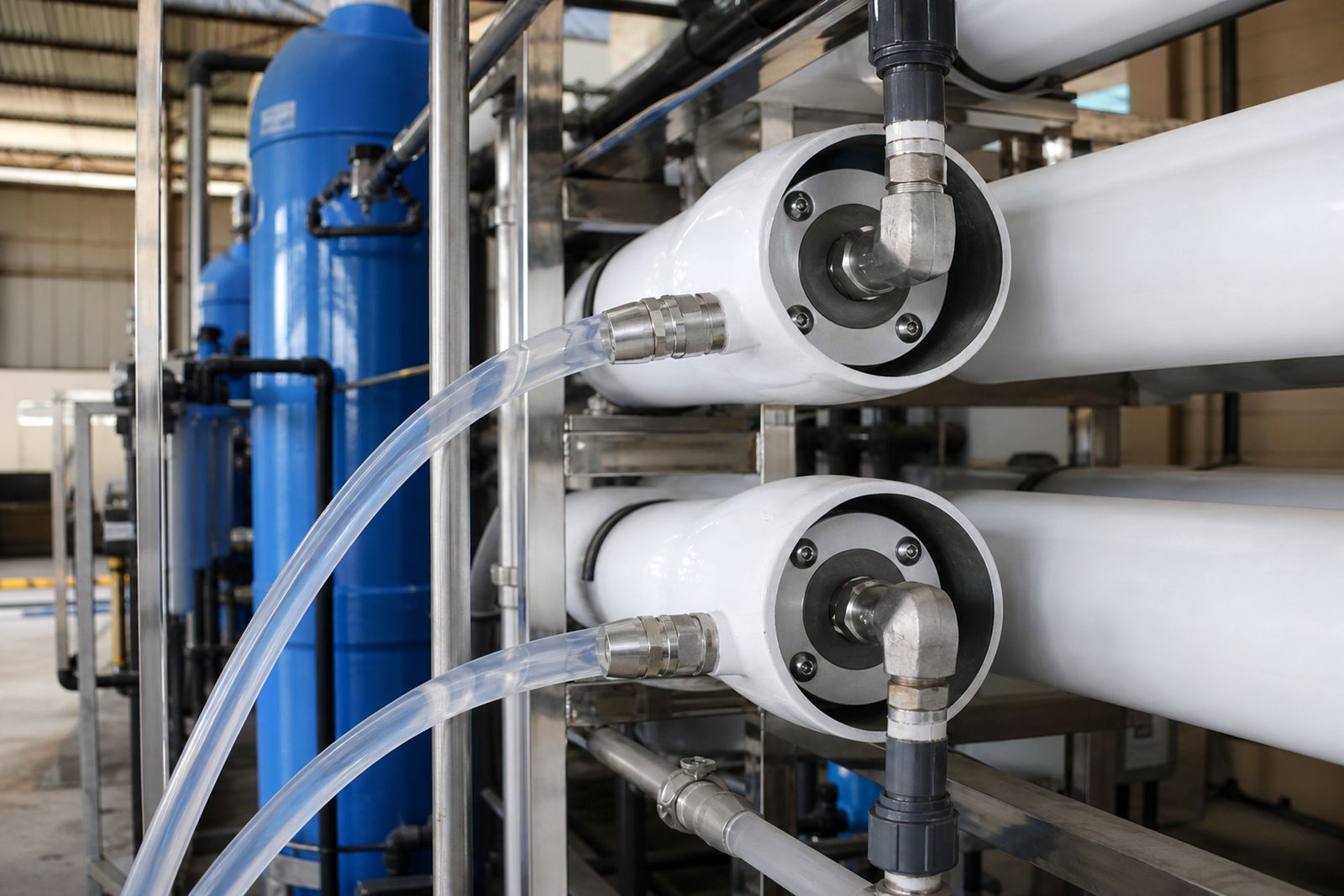
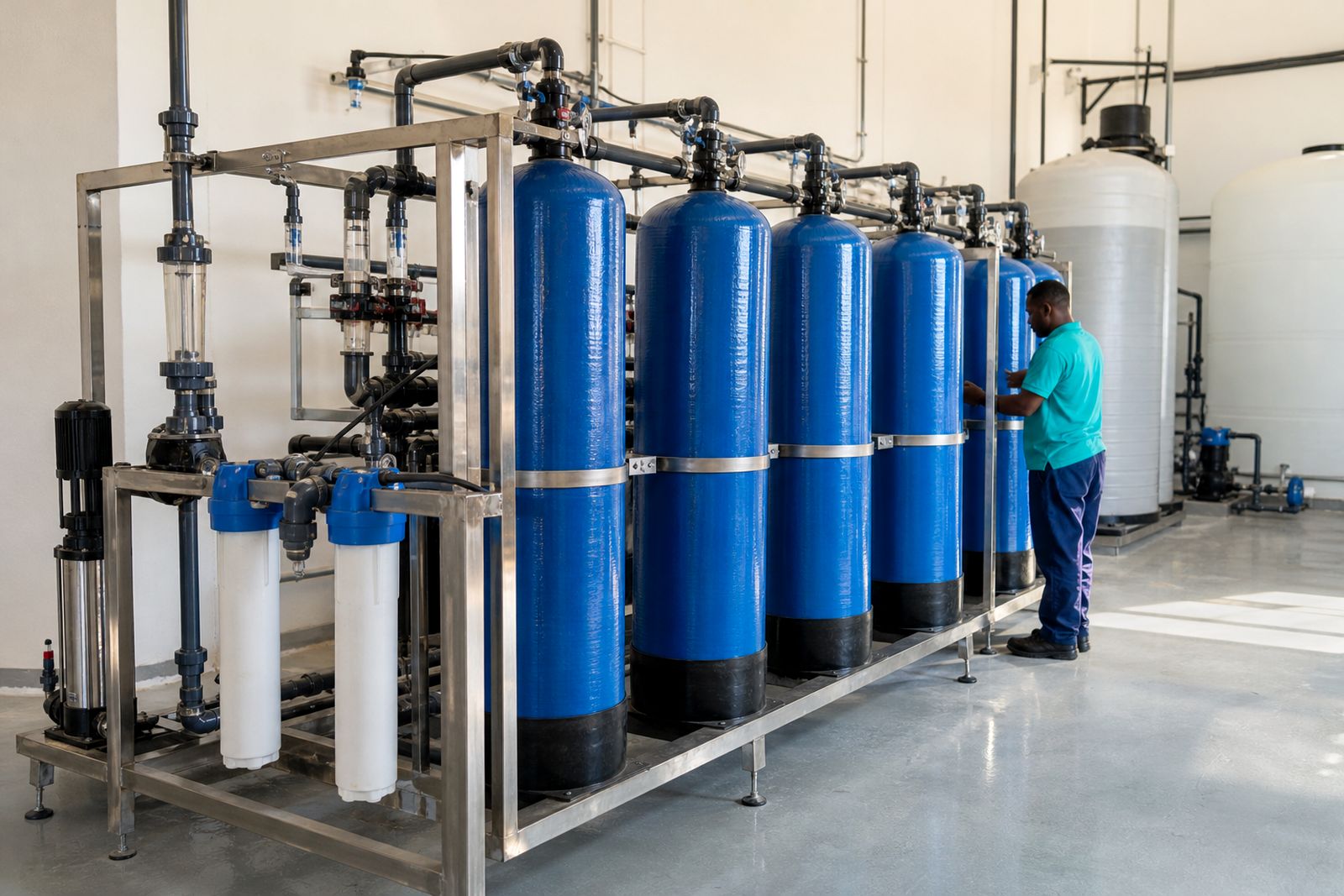
A reverse-osmosis plant for a dialysis unit is the part of the water system that takes treated incoming water and pushes it through membranes to reduce dissolved contaminants before the water moves on to storage or a distribution loop. In practice, the plant sits between the pre-treatment stages and the downstream pipework, with controls, gauges, sample points and drains arranged so staff can monitor the plant and service technicians can work on it safely.
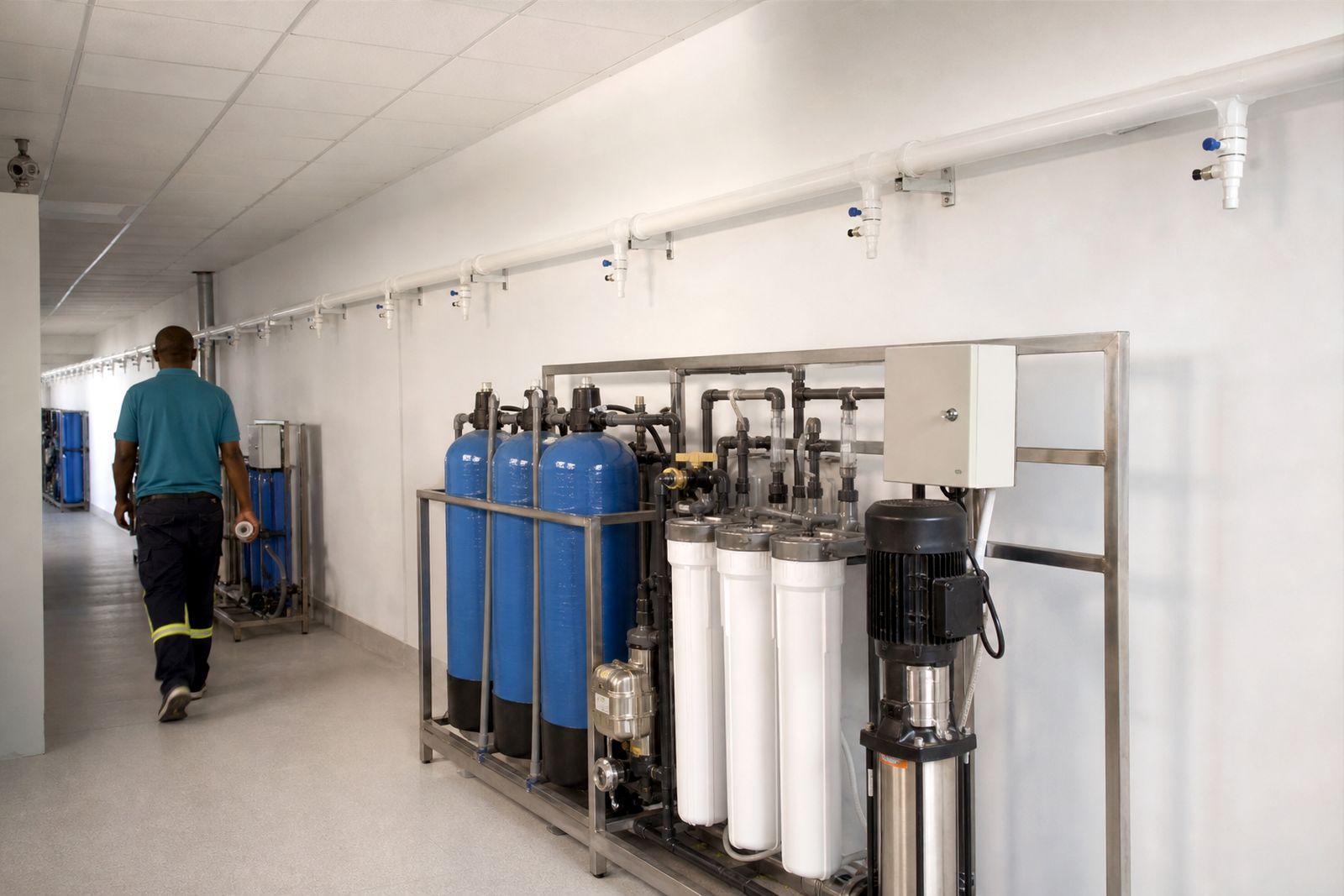
On most sites the plant package includes pre-filtration upstream, softening where required, the RO section itself, pressure control, reject and product lines, safe drain routing and clear points for disinfection and sampling. We look at the full line from tap to drain because problems often start outside the RO skid itself, such as unstable feed pressure, poor drainage or cramped plant rooms.
- Incoming water review and pre-treatment layout
- RO membranes, pump set and controls
- Connections to storage or distribution loop where applicable
- Drain routing for reject water and service discharge
- Access for disinfection, testing and routine maintenance
Plant layouts, sizes and working limits
There is no one standard dialysis RO layout that suits every site. Smaller units may need a compact plant room arrangement with straightforward access and short pipe runs, while larger facilities often need more separation between treatment equipment, chemical storage, sample points and drains. We can advise on single-pass and multi-stage arrangements depending on the unit's setup and the responsible staff's requirements.
Working limits matter as much as the equipment choice. Feed water quality, incoming pressure, water temperature, room ventilation, drain fall and power stability all affect how the plant performs. Coastal conditions around Durban can also affect material choices and maintenance intervals because humidity and airborne corrosion can shorten component life if the room is not planned properly. If a site has frequent power cuts, the plant and controls must be set out so restart procedures are clear and safe.
- Compact layouts for limited plant room space
- Separate pre-treatment and RO zones where space allows
- Loop-fed arrangements for dedicated distribution pipework
- Manual or higher-automation control options depending on site practice
- Materials selected to suit indoor service and local humidity
We do not give clinical advice and we do not set a unit's testing limits. The unit and its responsible staff set the testing schedule and limits, and we keep the records as part of the agreed service arrangement.
Where an RO plant suits, and where it does not
These plants are intended for dialysis units and related treatment spaces where controlled water treatment is required as part of the unit's own operating process. They suit fixed facilities with a dedicated incoming water point, stable drainage, a serviceable electrical supply and room for maintenance access around the plant. They are also suitable where the operator needs a clear service plan covering filters, softener salts, disinfection and log keeping.
An RO plant does not suit a site that has no proper drain route, no secure location for treatment equipment or no practical way to isolate and service the incoming line. It is also not suitable to assume that a general building water booster or a domestic-style purifier can stand in for a dialysis water plant. Where the water room is shared with unrelated building services, the layout must prevent contamination risks and give technicians enough room to work, otherwise the site usually needs changes before installation can proceed.
Site requirements before installation
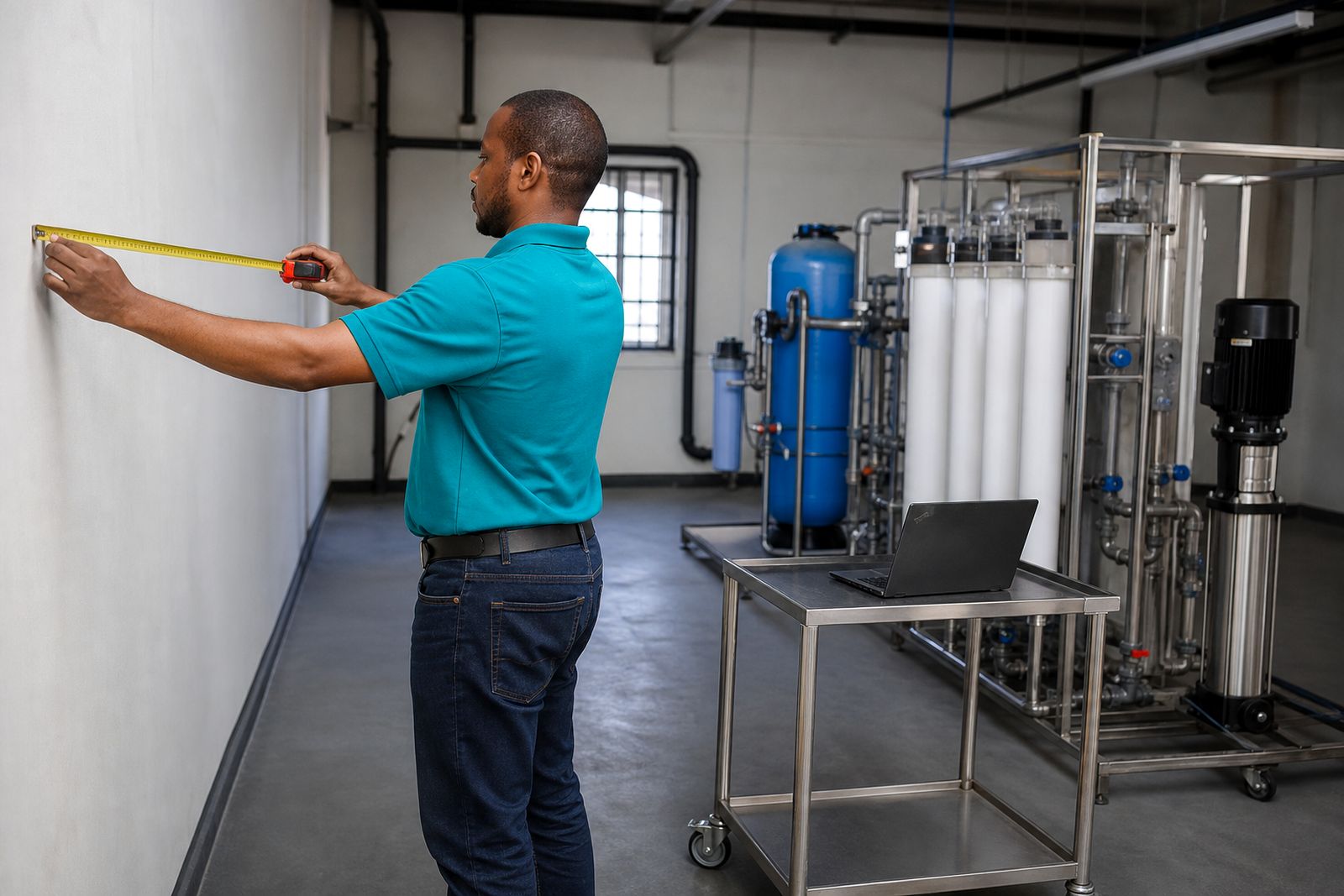
Before installation we check the route from the incoming supply to the drain point, and we look closely at plant room access, wall condition, floor drainage, ventilation and available isolation points. In older buildings around Pinetown and greater Durban, a common issue is plant rooms that were not originally planned for dialysis water equipment, so pipe routes and drain falls need careful checking. Municipal supply interruptions and pressure swings can also affect design choices.
- Dedicated incoming water connection with accessible isolation
- Reliable power supply for the plant controls and pump set
- Drain point sized and positioned for reject and service discharge
- Room ventilation and lighting for safe operation
- Enough clearance for membrane change, filter service and disinfection work
- Protection from outdoor weather, spray and direct corrosion exposure
If the plant links to a distribution loop, we also review the route, support points and return arrangement. A neat installation makes later service work much easier, and it helps operators see quickly what is normal and what is not.
Care, service and record keeping
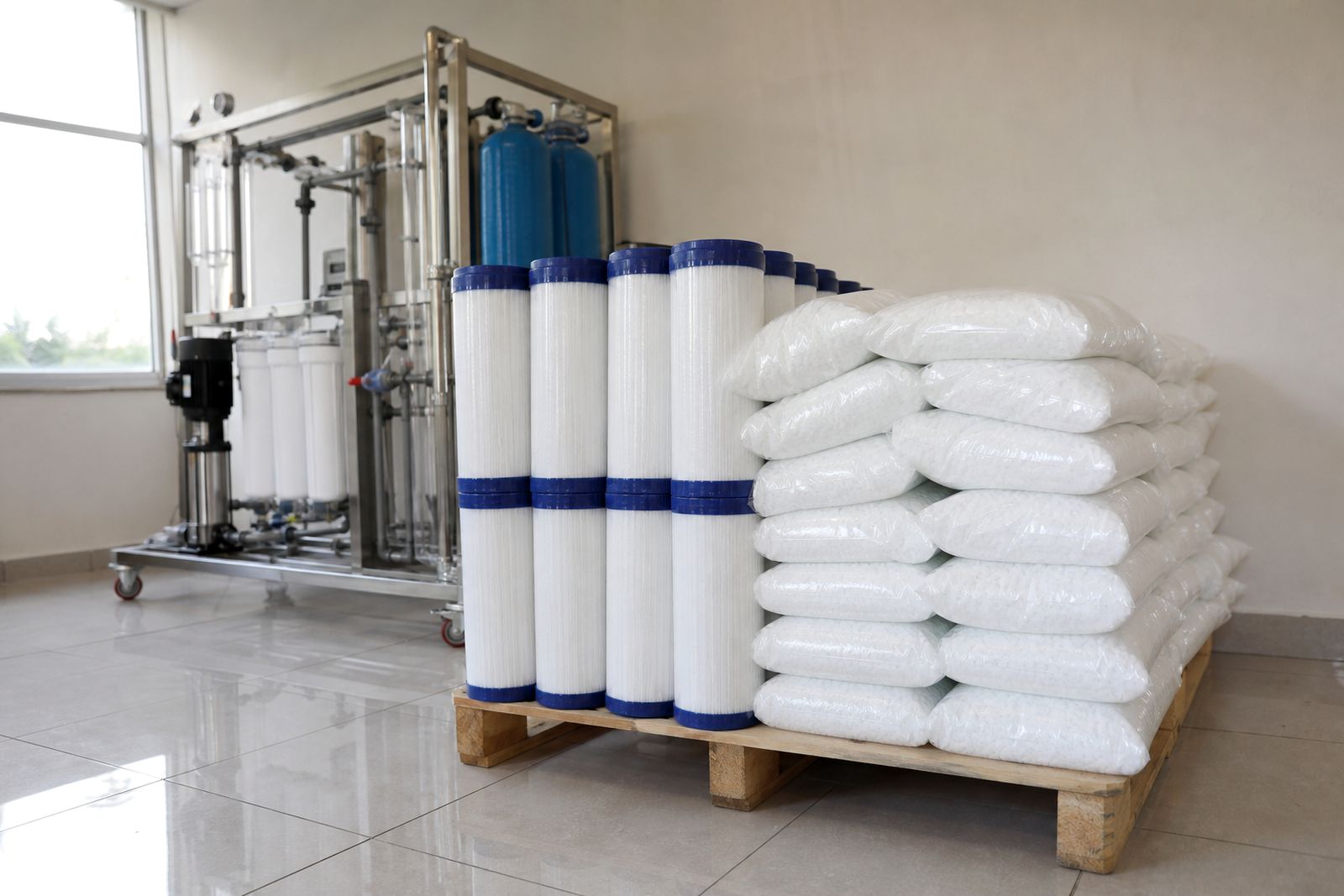
RO plants need routine attention. Pre-filters must be changed on schedule, softener salt levels must be maintained where softening is part of the system, membranes must be checked as part of normal service and the full plant must be disinfected according to the unit's procedure. Small issues left unattended, like a blocked cartridge stage or a leaking fitting, often turn into bigger shutdown problems.
We offer planned service support covering plant inspection, consumables, disinfection support and water-quality testing logs. The unit and its responsible staff decide the testing schedule and limits; we record the checks and service actions agreed for the site. This keeps the paperwork in one place and gives the operator a clear maintenance trail. If the site experiences power cuts or unstable municipal feed, tell us, because this can affect service intervals and restart checks.
What to tell us when you enquire
When you send an enquiry through our contact page, a few practical details help us advise you properly from the start. If the unit is already operating, tell us what treatment stages are on site now and what parts are giving trouble. If the project is new, tell us what services are already available in the plant room and what still needs to be installed.
- Town and facility type
- Whether this is a new installation, replacement or service request
- Existing treatment stages, if any
- Whether there is a distribution loop
- Any known feed pressure, drainage or space constraints
- Power supply concerns and restart issues after power cuts
- Preferred dates for site survey or service visit
Photos of the plant room, incoming water point and drain area are useful if available. If responsible staff already have a testing schedule in place, mention that too so we can align our record keeping with the unit's process from the start.
What our Water Treatment customers say
Verified Google reviews
Questions we get asked
Do you only work on complete new plants?
No. We can assist with new installations, plant replacements, upgrades to existing treatment lines and service work on operating dialysis water systems.
Can you set our testing limits or clinical procedure?
No. We do not give clinical advice. The unit and its responsible staff set the testing schedule and limits, and we keep the records for the agreed service scope.
What if our site is outside KwaZulu-Natal?
Our base is in Pinetown and we regularly work near Durban and across KwaZulu-Natal, with support in other provinces on request depending on the installation or service requirement.
Also worth a look
Ask about a water plant
Send a note through our contact form with your unit, the number of treatment stations and whether you need a new plant, a service or testing, and an engineer will contact you.
Open the contact form