Softener salt deliveries
We supply scheduled softener salt deliveries for dialysis water treatment plants in Pinetown near Durban and across KwaZulu-Natal. The service is planned around your plant room access, storage space and replenishment routine so your softener can be topped up properly and on time.
What is included in the service
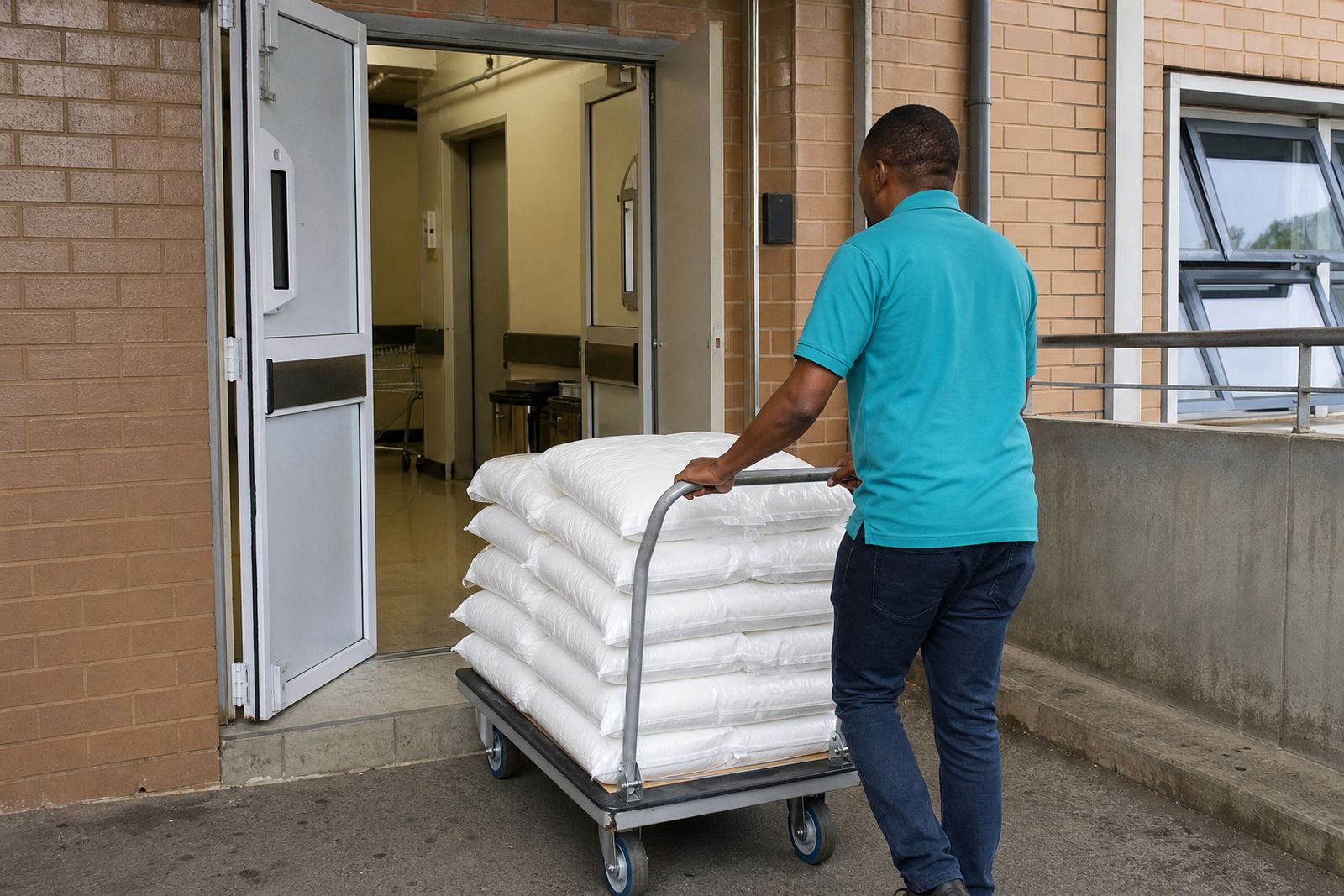
Our softener salt delivery service is set up for dialysis units that want a regular, predictable supply rather than last-minute orders. We deliver salt for water softener brine tanks used as part of the pre-treatment section ahead of the reverse-osmosis plant. The visit can be a simple drop-off to your nominated storage point, or a full replenish to the softener vessels or brine tank area, depending on how your unit works.
Where needed, the technician also does a practical visual check around the salt storage and refill point. This is not a clinical service and it does not replace plant maintenance, but it helps pick up simple issues such as damp stock, broken bags, salt bridging, caking or poor housekeeping around the brine area.
- Scheduled deliveries weekly, fortnightly, monthly or to your agreed call-off plan
- Delivery to plant room, stores area or another approved on-site handover point
- Replenishment of the brine tank where site access and unit procedure allow
- Basic visual check for salt level, caking, bridging and storage condition
- Delivery note and service record for your site file
How the delivery process works
We first confirm your unit details, delivery point, access hours and how your team wants the handover handled. For sites in Pinetown and greater Durban this is often added to an existing service route. For other KwaZulu-Natal towns we plan around distance, road time and whether the delivery is standalone or combined with another plant visit.
On the day, the driver or technician reports to the authorised receiving point, checks the quantities to be offloaded and moves the stock to the agreed area. If replenishment is included, the salt is transferred carefully to the softener brine section using the route and handling method approved by the unit. We try to keep bags off wet floors and away from direct splashing because moisture shortens storage life and makes handling harder later.
- Booking confirmation and access check
- Route planning for your area
- Offloading at the agreed point
- Replenishment if included in scope
- Record of quantity delivered and any visible issue noted on site
If we see something that needs attention, such as damaged lids, poor drainage near the brine tank or salt stock packed too tightly against a wall, we note it for the responsible staff member. Where a broader water plant issue is suspected, we can recommend a separate service visit.
What your unit should prepare before delivery
A good salt delivery goes quickly when the site is ready. The most common delays are blocked access passages, no receiving staff available and no dry storage space for reserve bags. If your plant room is inside a controlled clinical area, please make sure our technician knows the route, sign-in process and any handling restrictions before the visit. This saves time and avoids bags being left in the wrong place.
Your unit should also decide whether the visit is supply only or supply plus refill. Some units prefer their own operator to supervise every refill, others want us to complete the task and leave the paperwork with stores or the plant room file. Either approach is fine if agreed in advance.
- Clear access from offload point to storage or plant room
- A dry, level storage area protected from leaks and coastal humidity
- Authorised staff available to receive and sign off the delivery
- Safe lifting route, trolley access or lift access where applicable
- Confirmation of whether empty bags must be removed from site
If your unit keeps a water-quality testing log and plant service file, we can leave the delivery record there for traceability. The testing schedule and limits are set by the unit and its responsible staff; we keep the records that relate to our visit.
General pricing factors
Salt delivery pricing is worked out from the practical parts of the job rather than a flat one-size-fits-all rate. The main factors are travel distance from Pinetown, how often you need deliveries, how much stock is delivered at a time and whether the visit is a simple drop-off or includes carrying and refilling into the brine section.
Access conditions matter too. A ground-floor plant room with direct vehicle access is quicker than a site that needs long internal movement, service lift use or strict booking windows. Outlying towns in KwaZulu-Natal may be grouped onto planned routes to keep transport efficient. On-request work in other provinces is handled the same way, with timing and travel agreed before the job goes ahead.
- Delivery frequency and quantity per visit
- Travel distance and route planning
- Offload conditions and carrying distance
- Refill labour if included
- Urgent call-out versus scheduled supply
We do not publish fixed rates on this page because each unit runs differently, and a small change in access or frequency can affect the job quite a bit.
Aftercare and ongoing support
After each delivery, your unit receives a record of what was delivered and any basic issue seen during the visit. This helps your team track usage and order timing, especially where more than one staff shift may handle the plant room. If stock use looks unusual, we can flag it for review so the unit can decide whether a service inspection is needed.
For units on a regular supply plan, we can align salt deliveries with other water plant work such as filter changes, disinfection visits or a general service call. That keeps traffic through the plant room lower and makes planning easier for the operator. It also helps prevent avoidable stock-outs during busy periods or after public holidays when transport can be slower than normal.
This page covers salt supply and handling only. We do not give clinical advice, and we do not set treatment parameters, testing limits or patient-related procedures. If your team wants the wider plant checked, we can arrange the correct service scope through the enquiry form on our contact page.
Practical supply notes and handling specs
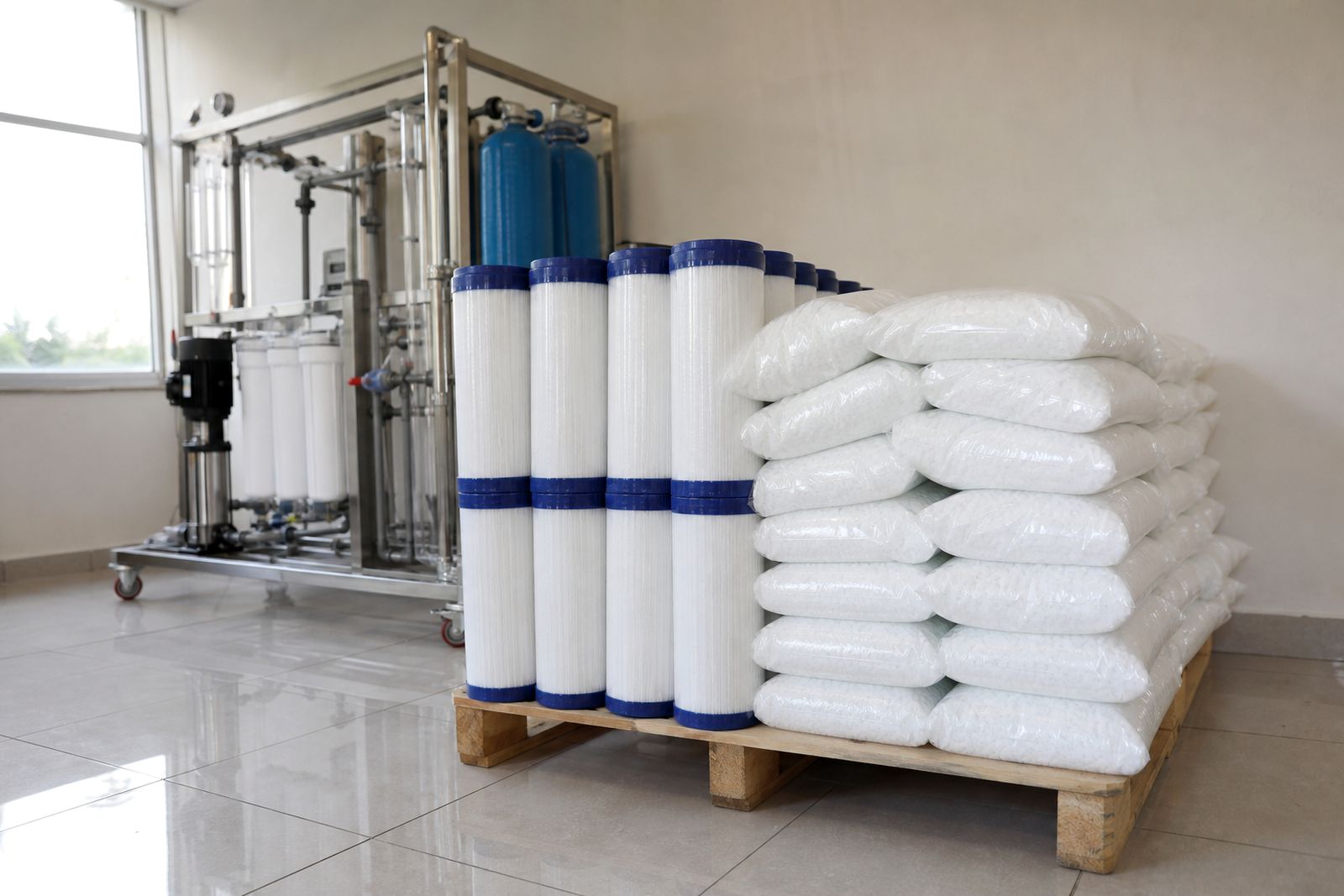
Softener salt should arrive in clean, sealed bags and be stored dry until use. In coastal areas around Durban, moisture control is especially important because humid air can harden stock if bags are left open or stacked against damp walls. We recommend first-in first-out use and keeping reserve stock off the floor on a suitable pallet or shelf base where site rules allow.
Where units ask us to refill the brine section, we work carefully to avoid splitting bags and to keep the area tidy after the task. Any unusual condition such as excessive clumping or visible contamination is reported back to the responsible staff member before we leave.
- Dry indoor storage preferred
- Keep bags protected from leaks, wash-down spray and wet floors
- Do not store directly against exterior walls if condensation is common
- Use stock rotation so older bags are used first
- Book ahead before long weekends and shutdown periods
What our Water Treatment customers say
Verified Google reviews
Questions we get asked
Can you deliver salt on a fixed schedule?
Yes. We can plan weekly, fortnightly, monthly or another agreed schedule based on your unit's usage, access times and storage space.
Do you only drop the bags, or do you refill the softener as well?
Both options are available. Some units want supply only, while others want us to carry the salt through to the plant room and refill the brine section under site procedure.
Do you decide how often testing must be done after a delivery?
No. The unit and its responsible staff set the testing schedule and limits. We keep the records related to our visit and can coordinate with your broader plant service plan.
Also worth a look
Ask about a water plant
Send a note through our contact form with your unit, the number of treatment stations and whether you need a new plant, a service or testing, and an engineer will contact you.
Open the contact form