Daily plant checks
Daily checks help unit staff spot small plant issues before they turn into downtime or water interruptions. This guide covers simple observations and log entries for dialysis water systems, from incoming water to drain.
Why daily checks matter
A dialysis water plant works best when it is watched consistently, not only when there is a fault. A short check at the same time each day helps staff notice changes in pressure, unusual alarm activity, signs of leaks, and whether consumables may need attention soon.
These checks do not replace the unit's own procedures, testing schedule, or clinical decision-making. The unit and its responsible staff set the testing schedule and limits; we keep the records and support the plant from tap to drain. If anything falls outside the unit's accepted range or normal plant behaviour, report it through the unit process and arrange service support.
In KwaZulu-Natal, daily attention is especially useful where municipal supply can vary after line work, heavy rain, or local interruptions. Coastal humidity around Durban and Pinetown can also make condensation and corrosion easier to miss if no one looks over the plant room properly each day.
Before you start the check
Do the round when the plant is running under normal conditions where possible. Use the unit's log sheet or record book and write clearly, including the date, time, and initials of the staff member doing the check. If your unit uses a separate sheet for alarms or corrective action, complete that too.
- Wash hands and follow the unit's entry and hygiene procedure for the plant room.
- Check that the floor is safe and dry before walking around pumps, tanks and pipework.
- Make sure enough light is available to read displays and inspect connections.
- Carry the current log sheet, pen, and any unit-approved torch if needed.
- Do not change control settings unless that task is assigned to authorised staff.
If there has been a municipal interruption or a power cut, make a note before starting the round. That extra context can help when reviewing trends later, and it often explains an unusual restart alarm or pressure fluctuation.
What to look at from inlet to drain
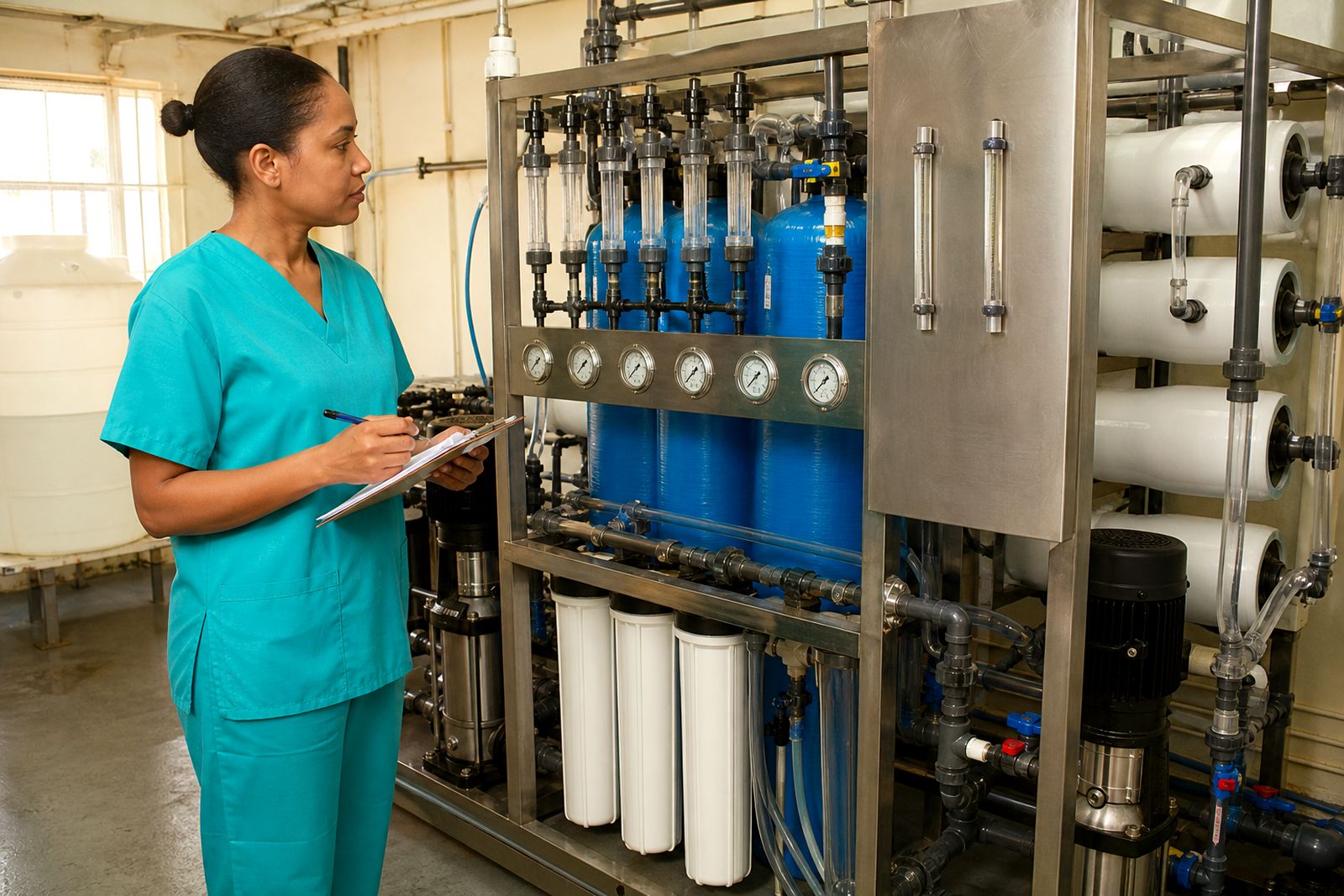
Walk the system in the same order every day so nothing gets skipped. Start at the incoming water side, then move through pre-treatment, the reverse-osmosis section, the distribution loop, and finally the drain points. A consistent route makes logging easier and helps new staff learn the plant faster.
- Incoming water supply available and isolation valves in the normal operating position.
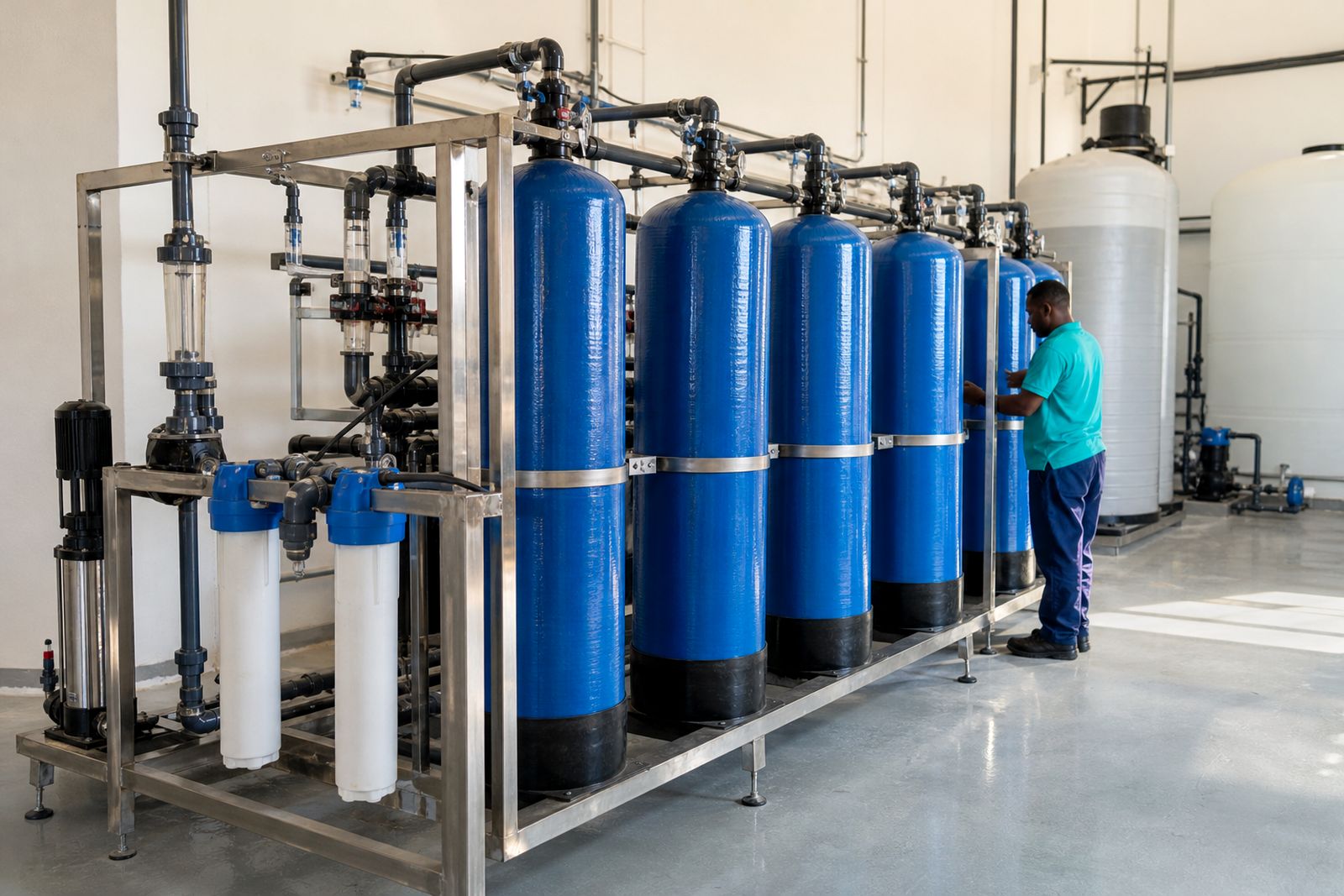
- Pre-filters, carbon vessels and softener area visually clean, with no obvious leaks or drips.
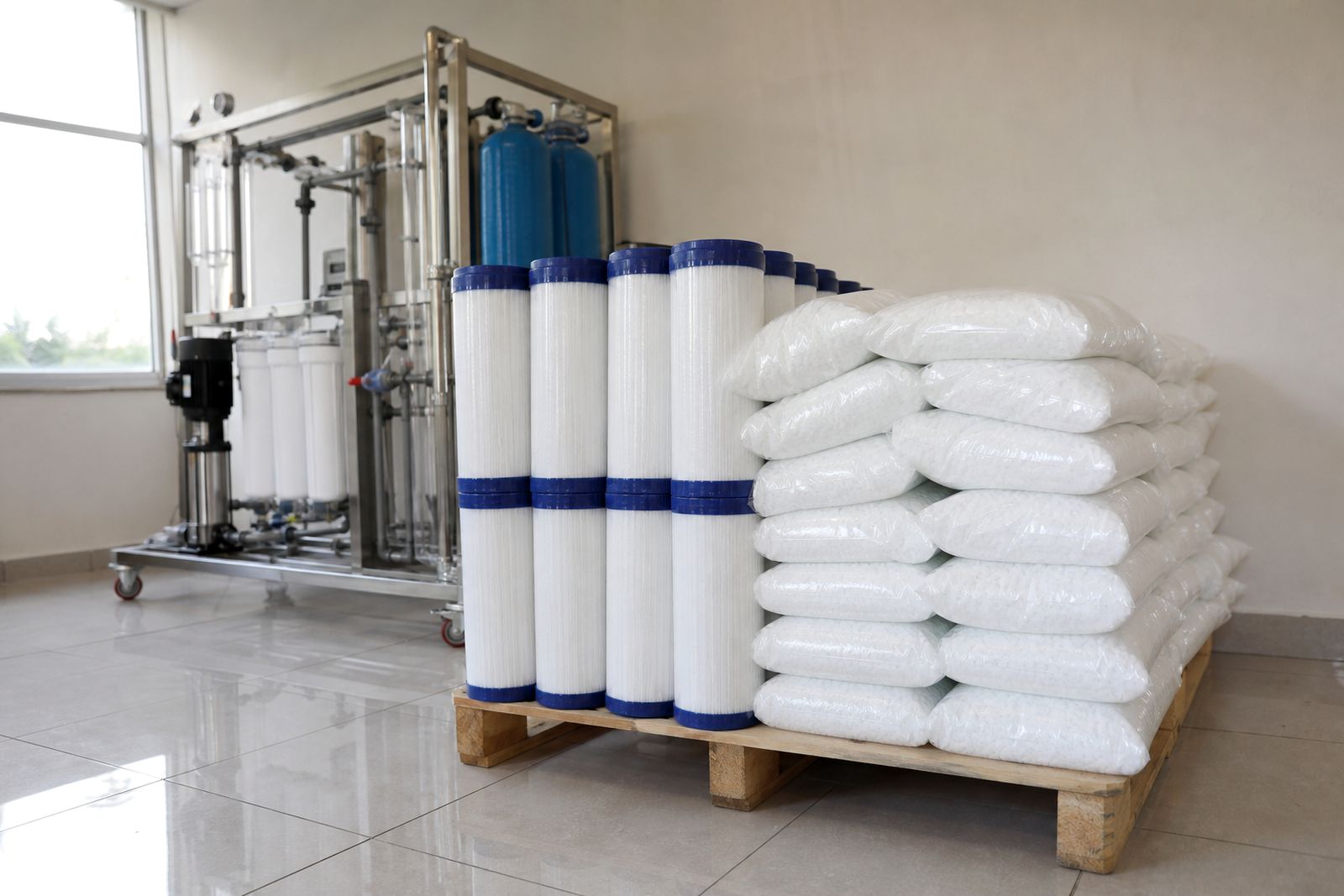
- Salt level in the softener brine tank checked if your unit includes this on the daily sheet.
- Pressure readings across key points recorded exactly as shown on the gauges.
- RO pump area checked for unusual noise, vibration, heat or water on the floor.
- Membrane section and housings checked for leaks around clamps, unions and end caps.
- Distribution loop running as expected, with no standing water around supports or joints.
- Return line and drain line flowing normally, without blockage smells or back-up signs.
- Any local indicator lights or status messages noted in full, not shortened from memory.
Listen as well as look. A change in sound from a pump or valve can matter even when displays still appear normal. If one reading is different but the rest of the plant appears stable, log it carefully rather than guessing what caused it.
Log readings and visible conditions
The log should give a clear daily picture of what the operator saw, heard and recorded. Good entries are brief but specific. Write down the actual reading shown on the gauge or display, not words like normal or fine unless the sheet asks for a yes or no confirmation.
Useful entries often include feed pressure, downstream pressure, any differential pressure points shown on the plant, operating status, alarm presence, and whether there is any visible leakage. Some units also ask staff to note tank level indication, room temperature, or whether the plant restarted correctly after an interruption. Keep the wording simple and consistent, it saves time later when trends are checked.
If your unit has a separate water-quality testing log, enter the daily observations in the plant check record and keep test results in the correct sheet or file. The unit and its responsible staff decide the testing schedule and acceptance limits; our role is to help maintain the records and service the equipment accordingly.
When to escalate a problem
Escalate anything that suggests the plant is not in its normal operating state. Do not try to work around leaks, alarms, repeated resets, or unexplained changes in readings. The safest habit is simple: record what you found, inform the responsible staff member, and request service support if required by the unit process.
- Any leak from housings, unions, sample points, pumps or loop pipework.
- A new alarm, a repeating alarm, or an alarm that returns after reset.
- A reading that moves outside the unit's accepted range.
- Unusual smell, overheating, vibration, rattling or cavitation-type noise.
- Blocked drain signs, slow discharge or water collecting where it should not.
- Salt unexpectedly low, carbon vessel concerns, or filter housings showing obvious fouling.
- Any restart problem after municipal interruption or power cut.
It is better to report early than to wait for the next round. A small drip in the morning can become a flooded plant room by afternoon and a minor pressure change can point to a filter issue needing attention soon.
Keep the plant room ready for service
Daily checks also support faster maintenance visits. When the room is tidy and the logs are up to date, the service technician can see patterns quicker and get to the actual fault without wasting time. That matters for units in Pinetown, Durban and elsewhere in KwaZulu-Natal where traffic and weather can already affect response timing.
Keep walkways clear, labels readable, and log sheets stored where authorised staff can find them quickly. If a vessel, drain or panel was wiped down because of splashing or condensation make a note if the unit requests it. Small details help build a recrod of normal conditions over time.
If you need help with daily check sheets, plant servicing, disinfection support, or water-quality testing logs, send an enquiry through our contact page. We work on dialysis water plants from tap to drain and can assist units across KwaZulu-Natal, with support in other provinces on request.
What our Water Treatment customers say
Verified Google reviews
Questions we get asked
Should unit staff adjust settings during the daily check?
Only if that task is part of the unit's authorised procedure. In most cases the daily check is for observation, logging and escalation, not changing plant settings.
What if one reading looks different but there is no alarm?
Record the reading exactly as shown, compare it with recent log entries, and inform the responsible staff member according to the unit process. If the unit requires service support, contact us through the enquiry form on our contact page.
Do you set the testing schedule for the unit?
No. The unit and its responsible staff set the testing schedule and limits. We keep the records, support the plant, and assist with water-quality testing logs, disinfection and service work.
Also worth a look

Ask about a water plant
Send a note through our contact form with your unit, the number of treatment stations and whether you need a new plant, a service or testing, and an engineer will contact you.
Open the contact form