Commissioning
Commissioning is the final start-up and hand-over stage before a dialysis water plant goes into routine use. We check the installed system from tap to drain, flush it through, record the agreed checks and hand it over to the unit team.
What commissioning includes
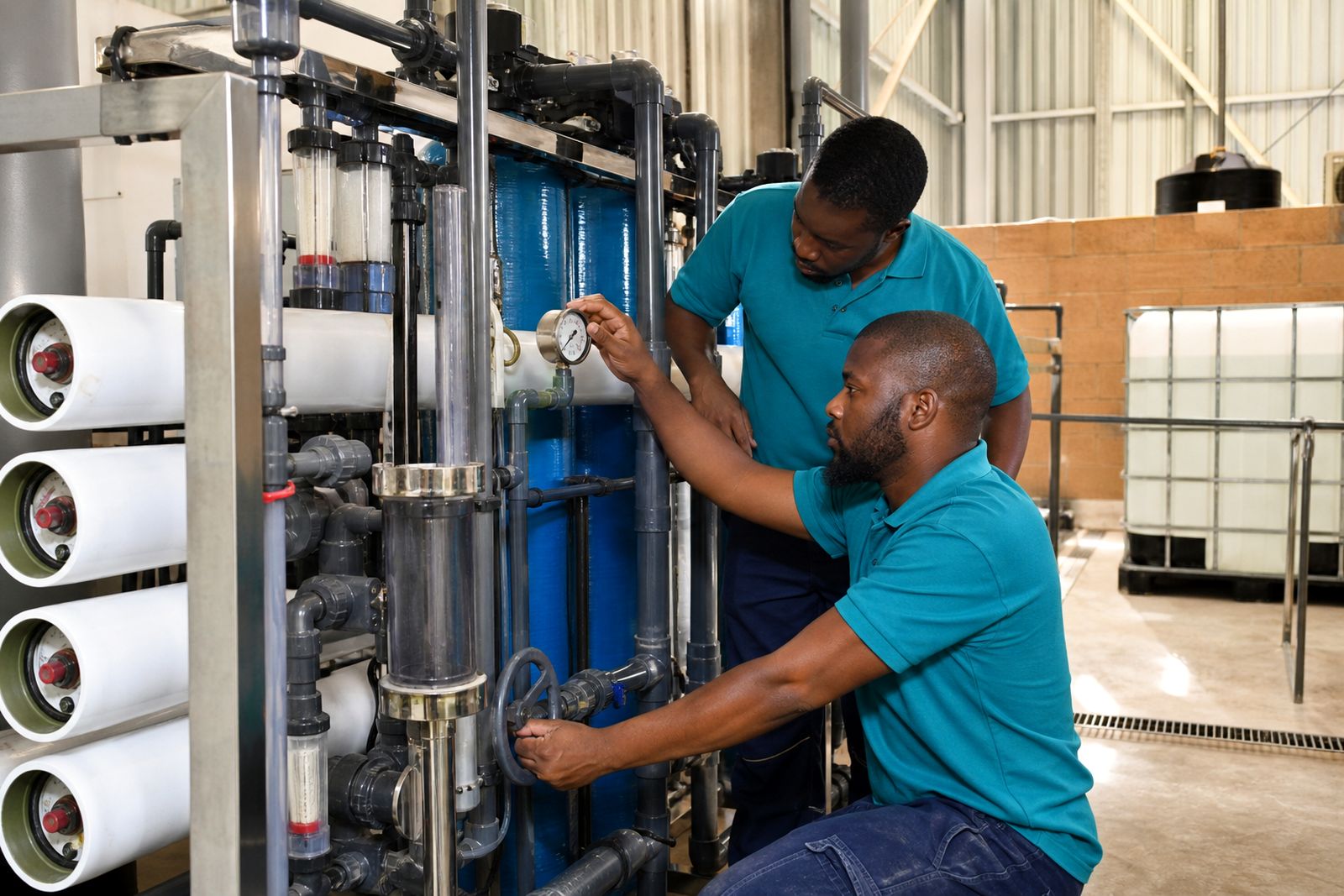
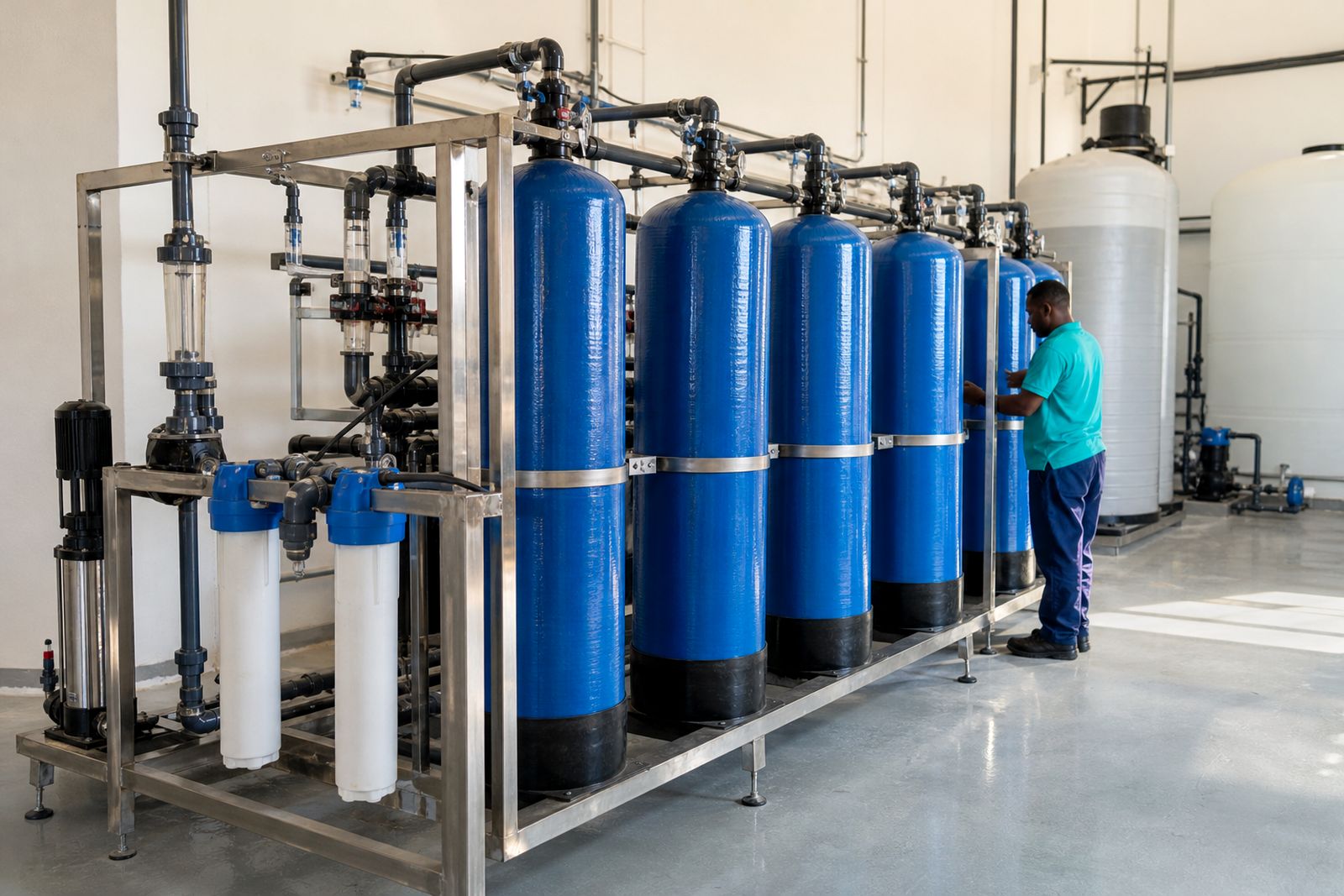
Commissioning covers the practical work needed to bring a newly installed or upgraded plant into service in a controlled way. This includes pre-treatment checks, flushing of pipework and vessels, verification of flow direction, valve positions, drain routes, access points and general plant room readiness. We also review the reverse-osmosis section, storage if fitted, distribution loop operation and the return path so the whole plant can be assessed as one working system.
For dialysis units the hand-over must be clear and traceable. The unit and its responsible staff set the testing schedule and limits, and we keep the records generated during commissioning and early service visits. We do not give clinical advice, but we do make sure the plant equipment is started correctly and that the site team knows the routine operating steps.
- Initial visual inspection of the installed plant and connected services
- Start-up of pre-treatment, softener, RO section and loop components
- Controlled flushing of new filters, housings, pipe runs and drains
- Check of alarms, shut-off functions and basic operating sequence
- Hand-over briefing with the responsible site staff
Step by step on the day
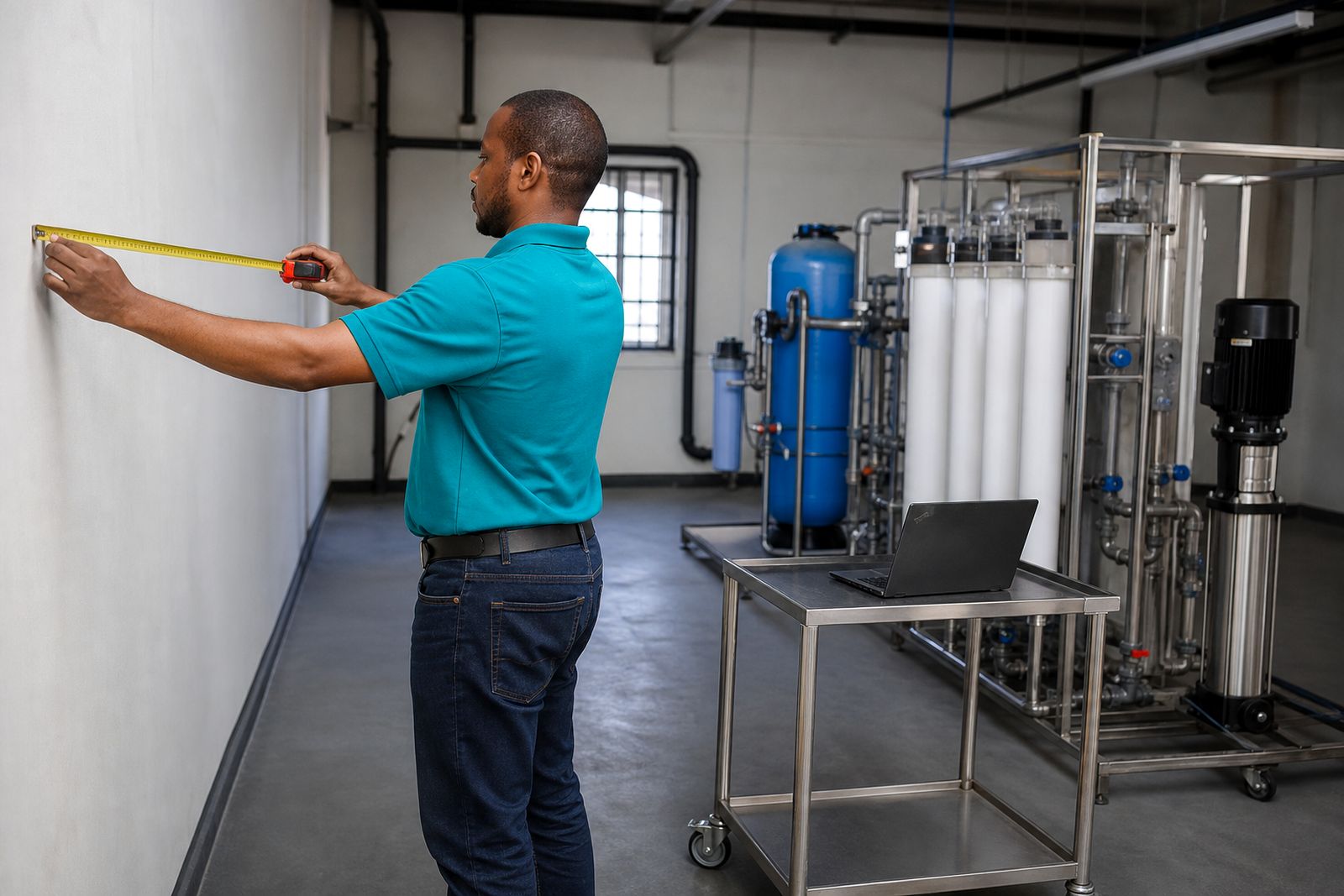
Commissioning normally starts with a site walk-through. Our technician checks incoming water points, drain fall, electrical isolators, room ventilation and whether there is enough clear working space around vessels, pumps and panels. If there have been changes since the site survey, we note them before start-up so the process is not rushed.
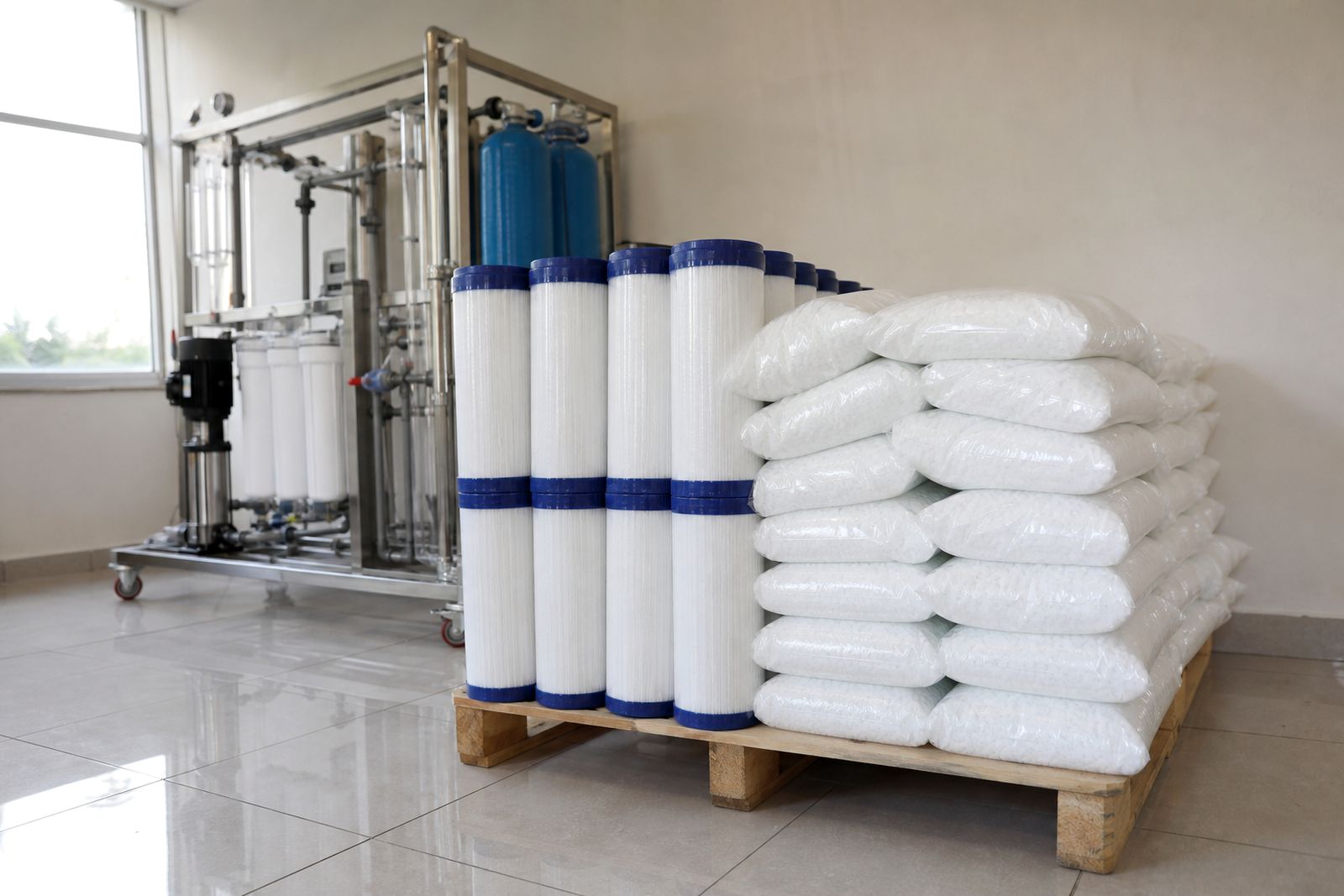
After that the plant is energised in stages. Pre-filters and carbon vessels are flushed first where fitted, then the softener section is checked and prepared with the correct salt arrangement if included in scope. The RO section is then brought online gradually so pressures, reject flow and recirculation behaviour can be observed. New loop pipework is flushed and the return line is checked for proper circulation. Small adjustments are often needed at this stage, especially on drain routing or valve labelling and it is better to sort them out before hand-over.
- Confirm utilities are available and safe to use
- Flush pre-treatment components and connected pipework
- Start RO plant in a controlled sequence
- Check circulation through the distribution loop and return
- Record agreed readings and site observations
- Review operator steps with the unit team before sign-off
What the client must prepare
A smooth commissioning visit depends on the plant room being ready before our team arrives. The area should be clean, accessible and free of unrelated storage. Incoming water, drain points and electrical supply must be available, and any builder's work that could affect dust or access should be complete. If there are municipal shut-offs planned in Pinetown, Durban or elsewhere in KwaZulu-Natal, it helps to book around them so flushing is not interrupted.
The responsible staff should also be available for the hand-over session. This is when normal start and stop steps, salt top-up points, filter change positions, drain routes and daily checks are shown on site. If your internal testing schedule requires specific samples or logging at hand-over, tell us in advance so the visit can be timed properly. Coastal humidity can affect rooms with poor ventilation, so we also ask clients to ensure the plant room is dry and has basic airflow.
- Clear access to the plant room, drain points and isolators
- Water and power available for the full visit
- Any local site permits arranged before arrival
- Responsible unit staff present for hand-over
- Consumables on site if they form part of the agreed scope
Records, checks and hand-over documents
Commissioning is not only about switching equipment on. It also creates the starting record for the plant in service. We document the installed layout as found on site, list the serviceable items included in the hand-over, and note the agreed routine checks that the unit team will continue with after start-up. Where the site requires water-quality testing logs, the unit and its responsible staff set the testing schedule and limits, and we keep the records in line with that agreed programme.
The hand-over file usually includes the basic operating sequence, isolation points, consumable positions, cleaning or disinfection notes relevant to the plant arrangement and a service visit record. If a small defect or incomplete item is found during commissioning, it is recorded for follow-up rather than being left as a verbal note, this avoids confusion later. Our aim is a practical hand-over that the operator can use on the next shift, not a thick file that sits unopened on a shelf.
How pricing is worked out
Commissioning cost depends on the scope of the plant and the site conditions. In general terms, pricing is based on how much equipment is being started, how much flushing is needed, whether the work is for a new installation or a modification, the travel involved, and whether the visit can be completed in one attendance. Sites outside the Durban and Pinetown area may need additional travel and time, especially if return visits are likely.
Other factors include access restrictions, after-hours work, standby for power cuts, and whether extra consumables are needed for first start-up. If the plant room is not ready on arrival and a second visit is required, that usually affects cost and timing. We explain the scope clearly before the job is booked so the unit knows what is included in the commissioning visit and what falls under later service or consumable supply.
Aftercare after start-up
After commissioning, most units move straight into a planned service routine. We can return for scheduled checks, filter and salt support, disinfection work and record keeping as agreed for the site. Early follow-up is useful because new installations often settle in during the first period of operation with minor adjustments to labels, access, drains or housekeeping.
If your team notices unusual alarms, unstable operation or changes after municipal supply interruptions, contact us through the enquiry form on our contact page so a service visit can be arranged. We support dialysis water plants across KwaZulu-Natal and can assist in other provinces on request. From tap to drain the focus stays the same: keep the plant understandable, serviceable and properly recorded.
What our Water Treatment customers say
Verified Google reviews
Questions we get asked
Do you commission only new plants?
No. We also commission upgraded sections, replacement RO equipment, loop changes and plant room alterations where a formal start-up and hand-over is needed.
Will you decide the water testing schedule for our unit?
No. The unit and its responsible staff set the testing schedule and limits. We keep the records and carry out the agreed service work around that programme.
How do we book a commissioning visit?
Send your details through the enquiry form on our contact page. Include the site town, whether it is a new installation or upgrade, and any timing restrictions for the plant room.
Also worth a look

Ask about a water plant
Send a note through our contact form with your unit, the number of treatment stations and whether you need a new plant, a service or testing, and an engineer will contact you.
Open the contact form